I. Alapvető származási információk:
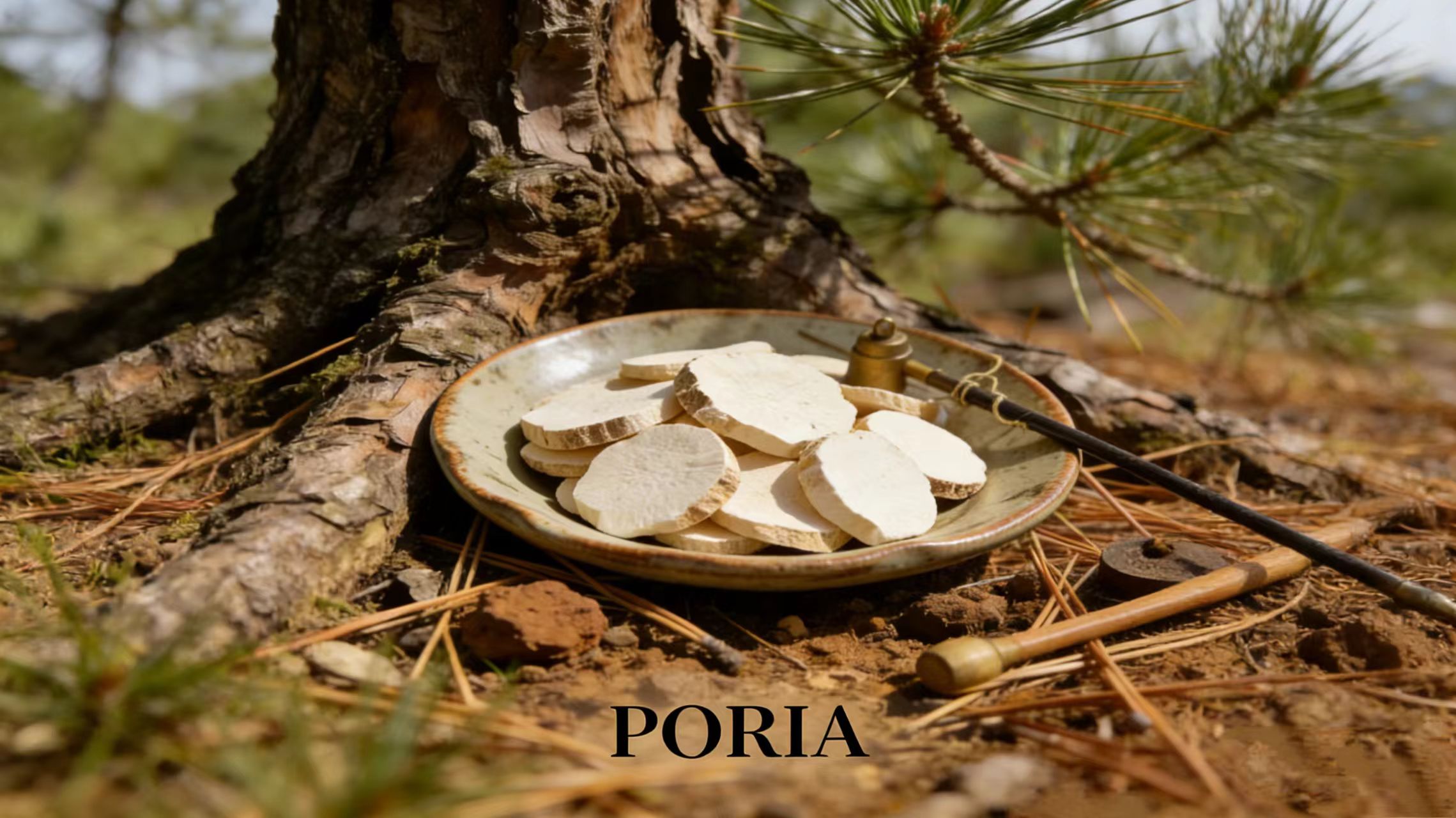
Az indiai kenyér, gyógyszerészeti latin neve PORIA, a Poria cocos (Schw.) Wolf gomba szárított szkleróciumja, amely a Polyporaceae családhoz tartozik. Ez a gombás termék, amely a fenyőfák gyökerein parazitál, és édesburgonyára hasonlít, a hagyományos kínai orvoslás rendszerében nagyra értékelt helyet foglal el, és az orvosok az idők során "minden évszak isteni gyógynövényeként" dicsérték. A Shennong Gyógynövények Klasszikusába való felvételét követően a legmagasabb kategóriájú gyógynövényként osztályozták. Nevében a "Fu" (茯) homofón a "Fu" (伏) szóra, amely a föld alatt rejtőzködni vagy alacsonyan feküdni jelent, míg a "Ling" (苓) a formáját írja le, amely a Polyporus Umbellatusra hasonlít. Az indiai kenyér semleges természetű és enyhe hatású; képes elűzni a kórokozó tényezőket és támogatni az igaz qi-t. Elősegíti a vizeletürítést anélkül, hogy károsítaná az igaz qi-t, és erősíti a lépet anélkül, hogy gátolná a nedvességet. Mivel minden négy évszakban alkalmazható, "minden évszak isteni gyógynövényének" nevezik, és a klinikai gyakorlatban az egyik legszélesebb körben használt kínai gyógynövény. [Kattintson ide, hogy elmerüljön kultúránkban.]
II. Hiteles termelési terület:
Kína Yunnan, Anhui és Hubei tartományai az indiai kenyér hagyományos valódi termelési területei. Ezek közül a Yunnanban, Lijiangban termelt "Yun Ling" és az Anhui-ban, Anqingben termelt "An Ling", valamint a Hubei Huanggang Dabie-hegység területe a legnevesebb minőségéről. E régiók egyedi természeti körülményei, a tudományos termesztési menedzsmenttel kombinálva, együttesen hozzájárulnak kiváló gyógyászati tulajdonságaikhoz: [ Biztonságos a gyógynövényfürdőzsák]
Tudományos alkalmazkodás a földrajzi és éghajlati viszonyokhoz: Az indiai kenyér meleg, jól szellőző, száraz környezetben virágzik, a fenyőfák gyökerein parazitálva. A Dabie-hegység valódi termelési területe 30° északi szélességen található, a szubtrópusi és meleg mérsékelt éghajlatok közötti átmeneti zónában, 500-1000 méteres magasságban. Éves átlaghőmérséklete 12-16 °C, éves csapadéka 1200-1400 mm, jól elkülönülő évszakai vannak, és gyakori a felhőborítás és a köd. Ez a "meleg, nedves és jó szellőzésű" hegyi környezet különösen alkalmas a Poria cocos micélium növekedésére és szkleróciumának megnagyobbodására. A laza, jól szellőző, jól vízelvezető homokos vályogtalaj kulcsfontosságú a "szilárd textúra, nehéz súly és finom keresztmetszet" jellegzetes minőségének kialakításához.
Technológiai újítások az ökológiai termesztésben:
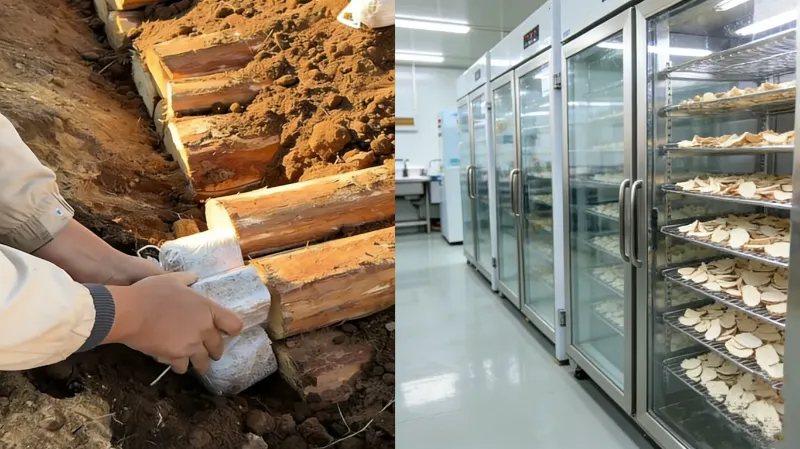
1. "Fenyő rönk szegmens" termesztési módszer: A termelési területek örökölték és innoválták a hagyományos "rönk szegmens termesztési" technikát. Olyan fenyőfajokat, mint a Pinus massoniana és a Pinus taiwanensis, 20-30 éves korúakat választanak. Télen kivágják őket, a kérgüket lehúzzák, fenntartva a tartalékcsíkokat, és napfényen szárítják, amíg a víztartalom körülbelül 20%-ra csökken. A fenyőfákban gazdag cellulóz és gyanta természetes kultúra közegként szolgál a Poria cocos micélium növekedéséhez. A modern kutatások megerősítették, hogy a fenyőfában található specifikus terpének serkentik a Poria cocos-t, hogy több jellegzetes triterpenoid aktív komponenst termeljen.
2. Fejlesztett fajták tenyésztése és inokulációs tudomány: A termelési területeken speciális tenyésztési bázisokat hoztak létre a Poria cocos törzsek számára, magas hozamú és kiváló minőségű törzsek, mint például a "Poria No. 5" és a "Poria No. 8" termesztésére. Az inokuláció a "hús csali" és "spóracsali" technikák kombinációját alkalmazza - magas minőségű friss indiai kenyér szeletek ("hús csali") vagy tiszta tenyésztett törzsek ("spóracsali") kerülnek inokulálásra a rönk szegmensek mindkét végén, a hőmérsékletet és a páratartalmat kontrollálva a micélium kolonizáció elősegítése érdekében. Ez a technika az inokulációs siker arányát a hagyományos 60%-ról 95%-ra növelte.
3. "Három ásás és három napozás" mezőgazdasági menedzsment: Az inokuláció után egy egyedi "három ásás és három napozás" menedzsment folyamatot követnek. A rönkök fölötti talajt 3-4 hónappal az inokuláció után eltávolítják, hogy ellenőrizzék a micélium növekedését; a rönkök 1-2 napig napfényen száradnak, mielőtt újra földdel befednék őket. A második felfedés és napozás akkor történik, amikor a szkleróciumok először képződnek. A harmadik közvetlenül a betakarítás előtt történik. Ez az időszakos napfény-expozíciós technika gátolja a különféle gombák növekedését, és elősegíti a Poria cocos szkleróciumainak megnagyobbodását és az aktív komponensek felhalmozódását.
4. "Fenyő-Poria rotáció" ökológiai modell: A termelési területek szigorúan végrehajtják a "egy év ültetés, három év pihenés" rotációs rendszert. Minden indiai kenyér betakarítása után a területet több mint három évig parlagon kell hagyni, vagy hüvelyes növényekkel kell beültetni a talaj ökológiájának helyreállítása és a talajban terjedő betegségek csökkentése érdekében.
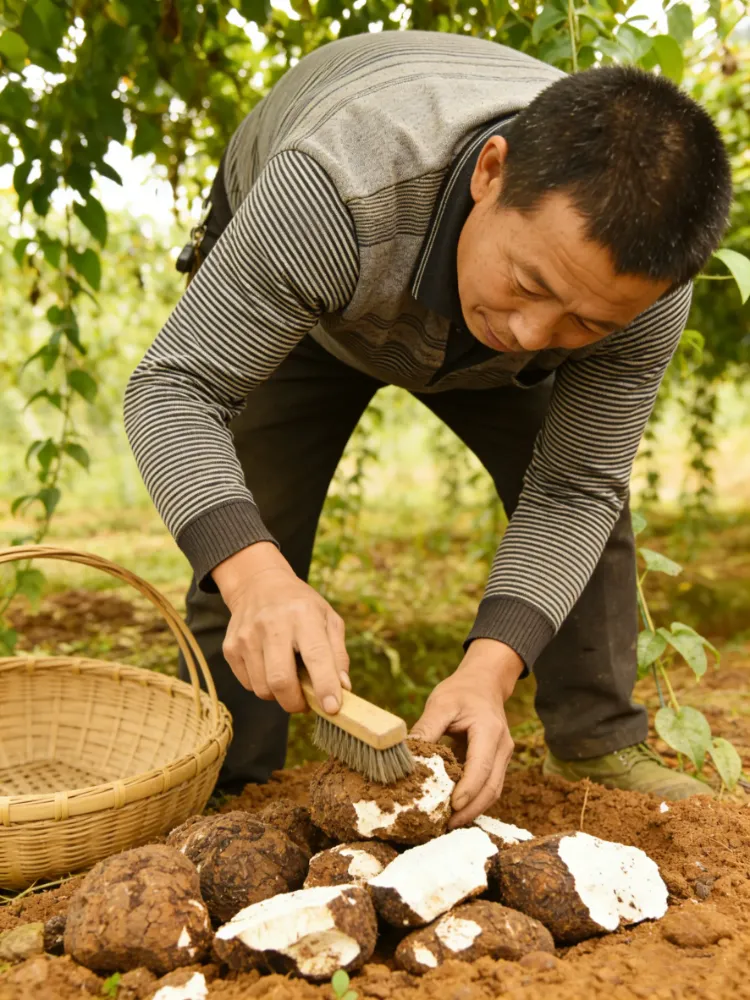
5. "Tulajdonságmegőrző" technikák a betakarítás és feldolgozás során: A betakarítás 8-10 hónappal az inokuláció után történik, amikor a szklerócium külső bőre sárgásbarna színűvé válik, és a textúra szilárddá válik. A hagyományos feldolgozás rendkívül aprólékos: a friss indiai kenyeret hámozzák, szeletekre vágják, és részek szerint osztják fel Fu-ling Pi (külső bőr), Chi Fu-ling (a bőr közelében lévő világos vörös rész), Bai Fu-ling (a belső fehér rész) és Fu Shen (a fenyőgyökér körüli fehér rész), mindegyik különböző terápiás hangsúlyokkal. A szárítás során "izzadás" folyamatot alkalmaznak - a szeletelt indiai kenyeret beltérben halmozzák, szalmával letakarják, lehetővé téve, hogy "izzadjon", majd többször napfényen szárítják, amíg száraz nem lesz. Ez a módszer lehetővé teszi, hogy a belső nedvesség egyenletesen elpárologjon, szilárdabb és finomabb textúrát eredményezve. A modern folyamatok hőszivattyús dehidratáló szárítási technológiát alkalmaznak, lassan dehidratálva alacsony hőmérsékleten, 25-35 °C-on, hogy maximalizálják a hőérzékeny triterpenoid komponensek megőrzését.
III. Minőség
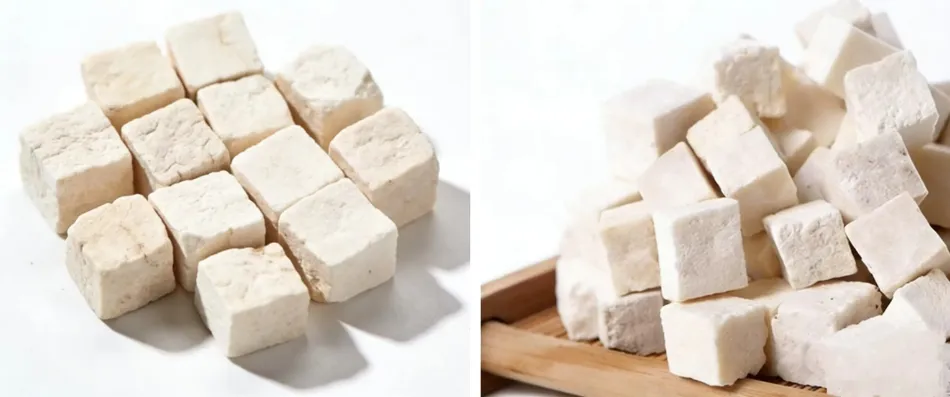
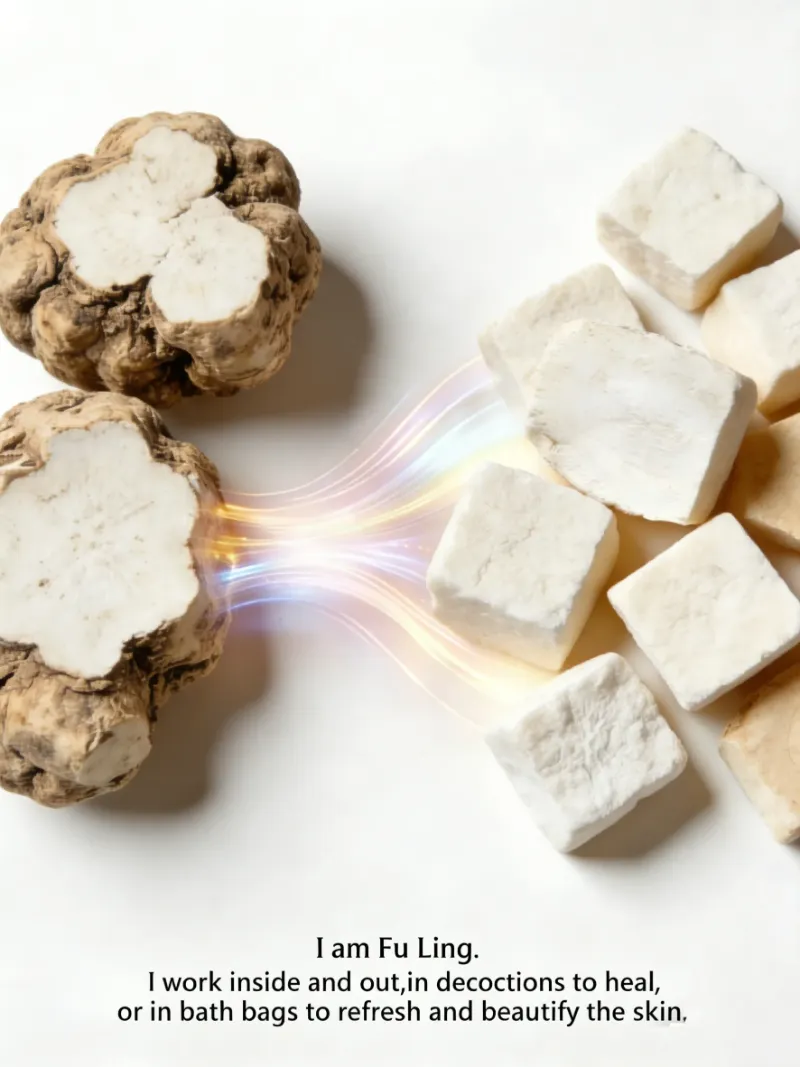
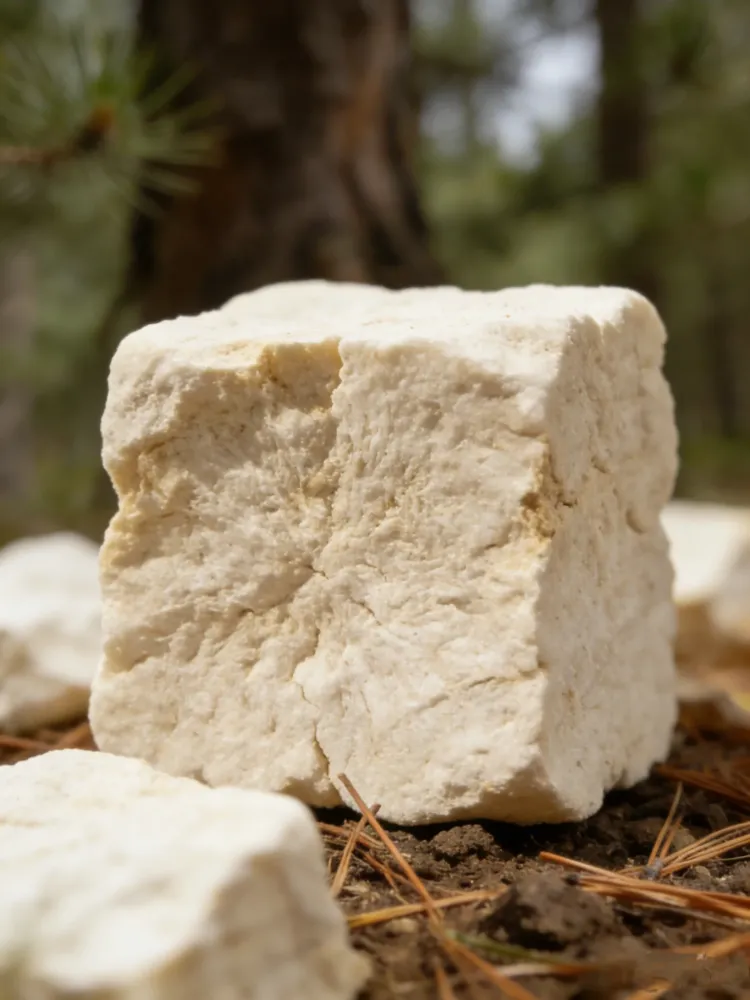
Magas minőségű indiai kenyér: Az egész szklerócium gömbszerű, ellipszoid vagy szabálytalan csomós alakú, méretük változó. A külső bőr vékony és durva, barna vagy fekete-barna, jól látható ráncos textúrával. A vágott termékek (például indiai kenyér kockák vagy szeletek) négyzet vagy téglalap alakúak, fehér vagy off-white színűek, rendezett élekkel. Nehezek, szilárd és tömör textúrájúak, és nem könnyen törnek. A keresztmetszet szemcsés, finom és sima, erős ragadós érzéssel rendelkezik, amikor rágják (ami magas poliszacharid tartalomra utal). Nehéznek érződik a kézben. Az illata enyhe, az íze íztelen, és rágáskor ragad a fogakhoz. Nincs kellemetlen szaga. Forró vízbe áztatva a folyadék enyhén zavarossá válik, és az indiai kenyér kockák vizet szívnak fel és kitágulnak anélkül, hogy szétesnének. Tűzön sütve enyhe gombaszagot áraszt. Jód teszteléskor nem válik kékké (a keményítő alapú hamisítványok tesztje). Magas minőségű Poria cocos-t választunk, hogy gyógynövényfürdő tea zsákot készítsünk. Kattintson ide, hogy felfedje exkluzív wellness gyógyító titkait.
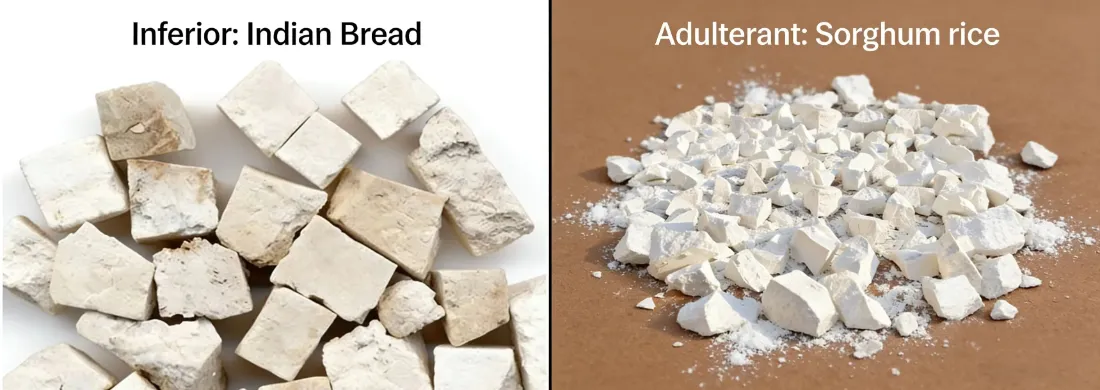
Átlagos/gyenge indiai kenyér: A külső bőr tompa színű, sekély vagy hiányzó ráncokkal. A vágott termékek szürkés-fehérek vagy sötétek, egyenetlen élekkel, és gyakran töredezettek. A textúra könnyű és porózus vagy laza és törékeny, könnyen törik. A keresztmetszet durva, gyenge por minőséggel rendelkezik, és rágáskor nem ragadós vagy érdes érzést kelt (ami ásványi hamisítványra utalhat). Az íze íztelen vagy savanyú (kén füstölés), összehúzó íz (hamisítvány) vagy dohos szagú. Rágáskor nem ragadós vagy gyenge ragadós érzést kelt. Forró vízbe áztatva a folyadék zavarossá válik, vagy a kockák gyorsan szétesnek. Tűzön sütve égett vagy savanyú szagot áraszt. Jód teszteléskor kékké válik (ami a kasszáva keményítővel való hamisítást jelzi, stb.).
IV. Fő kémiai összetevők
Poliszacharid vegyületek (β-Pachyman): Ezek az indiai kenyér elsődleges és jellegzetes aktív összetevői, amelyek tartalma elérheti a száraz súly 70%-90%-át. Különböző farmakológiai aktivitásokkal rendelkeznek, beleértve az immunerősítést, a daganatellenes, májvédő és öregedésgátló hatásokat, amelyek az "a lép erősítése és a qi pótlása" hatékonyságának alapanyagát képezik. A pachyman kémiailag módosított származékai, mint például a karboximetil pachyman, jelentősen fokozott immunmoduláló aktivitást mutatnak.
Triterpenoid vegyületek (Pachymic sav, Pachymaran, stb.): Ezek az indiai kenyér zsírban oldódó aktív összetevői, diuretikus, nyugtató, gyulladáscsökkentő, májvédő és daganatellenes hatásokat mutatnak. A modern kutatások megerősítették, hogy a pachymic sav képes modulálni az aldoszteron aktivitását, amely az "a vizeletürítés elősegítése és a nedvesség átszűrése" hatékonyságának fontos anyagi alapját képezi.
Sztanolok és zsírsavak: Ezek az ergoszterolt is tartalmazó összetevők szinergikus hatásokat mutatnak, mint például gyulladáscsökkentő és antioxidáns hatások.
Enzimek és nyomelemek: Ezek részt vesznek különböző biológiai aktivitásainak szabályozásában.
V. Alapvető hatékonyság
Az indiai kenyér semleges természetű, édes és íztelen, és a szív, tüdő, lép és vese meridiánokra hat. Alapvető hatékonyságai "a vizeletürítés elősegítése és a nedvesség átszűrése, a lép erősítése és a lélek megnyugtatása." Gyógyászati tulajdonsága enyhe és kiegyensúlyozott; elősegíti a vizeletürítést anélkül, hogy károsítaná az igaz qi-t, így "a lép erősítése és a nedvesség átszűrése" szent gyógynövényévé válik. Külsőleg "fürdőzsák" formájában alkalmazva, íztelen és átszűrő természetét kihasználva a víz melegítő és nedvesítő tulajdonságait, képes behatolni a bőrbe, kifejtve egyedi hatásait "a nedvesség átszűrése és a lélek megnyugtatása, valamint a bőr nedvesítése és a bőr szépítése." Kattintson ide, hogy felfedezze a prémium Poria-ból készült gyógynövényfürdő tea zsákunkat.
Nedvesség átszűrése és zavarosság eltávolítása, ekcéma és viszketés javítása:
Jó hatással van az ekcémára, a bőr eróziójára és nedvességére, a beriberire és a lép hiánya miatt fellépő ödémára, amelyet a nedvesség bősége okoz, hatékonyan átszűrve.g nedves turbidity a bőrből. Olyan összetevői, mint a pachyman és a triterpenoidok, teljesen felszabadulnak forró vízben, és transzdermális felszívódáson keresztül finoman átszivárognak és eltávolítják a bőr szöveteiben megmaradt nedvességet. Ekcémás betegek számára (akiket a TCM gyakran a lép hiányával és a nedvesség felhalmozódásával kapcsolatosnak tart) egy indiai kenyér gyógynövényfürdő segíthet a nedvesség megszüntetésében és a viszketés enyhítésében, csökkentve a váladékozást. Hosszú távú használata segíthet a nedves alkati állapot javításában.
Az elme megnyugtatása és a lélek csendesítése, az érzelmek megnyugtatása és az alvás segítése:
Jó szabályozó hatással van a szívdobogásra, álmatlanságra és a szív és lép hiányából, valamint a nyugtalan szív szelleméből eredő feledékenységre. Az elme megnyugtató és lélek csendesítő aktív összetevői, amelyek transzdermálisan felszívódnak és kombinálódnak a forró fürdő pihentető hatásával, finoman szabályozzák a központi idegrendszert, enyhítve a feszültséget és a szorongást. Azok számára, akiknek száguldó gondolataik vannak vagy nehezen alszanak el, egy indiai kenyér gyógynövényfürdő nyugodt és ellazult állapotot teremthet, megalapozva a békés éjszakai alvást.
A bőr hidratálása és a bőrszín szépítése, a bőr durvaságának javítása:
Bőséges poliszacharid összetevői táplálják a bőrt, javítva a szárazságot és a durvaságot. Az indiai kenyér vízben oldódó poliszacharidjai finom, hidratáló filmet képeznek a bőr felületén, megkötve a nedvességet és fokozva a bőr védőfunkcióját. Hosszú távú használat esetén a bőr rugalmasabbá, simábbá válik, és világosabbá teszi a bőrszínt. Ez a modern kozmetikai értelmezése az ősi szöveg "hosszú távú fogyasztás megnyugtatja a szellemet, táplálja az elmét, megelőzi az éhséget és meghosszabbítja az életet" leírásának.
A lép erősítése és a szállítás segítése, a hiánytípusú ödéma javítása:
Segítő javulást kínál az ödémára, sápadt bőrszínre és a lép hiányából eredő végtaggyengeségre. A TCM szerint "a lép irányítja az izmokat és a négy végtagot." A fürdőzés révén az indiai kenyér "lép-erősítő" hatása közvetve hat az izomszövetre, segítve a nedvesség szállítását és átalakítását, enyhítve a lép hiányából és a nedvesség terhétől eredő nehézséget és puffadást a végtagokban.