I.Base Origin Information
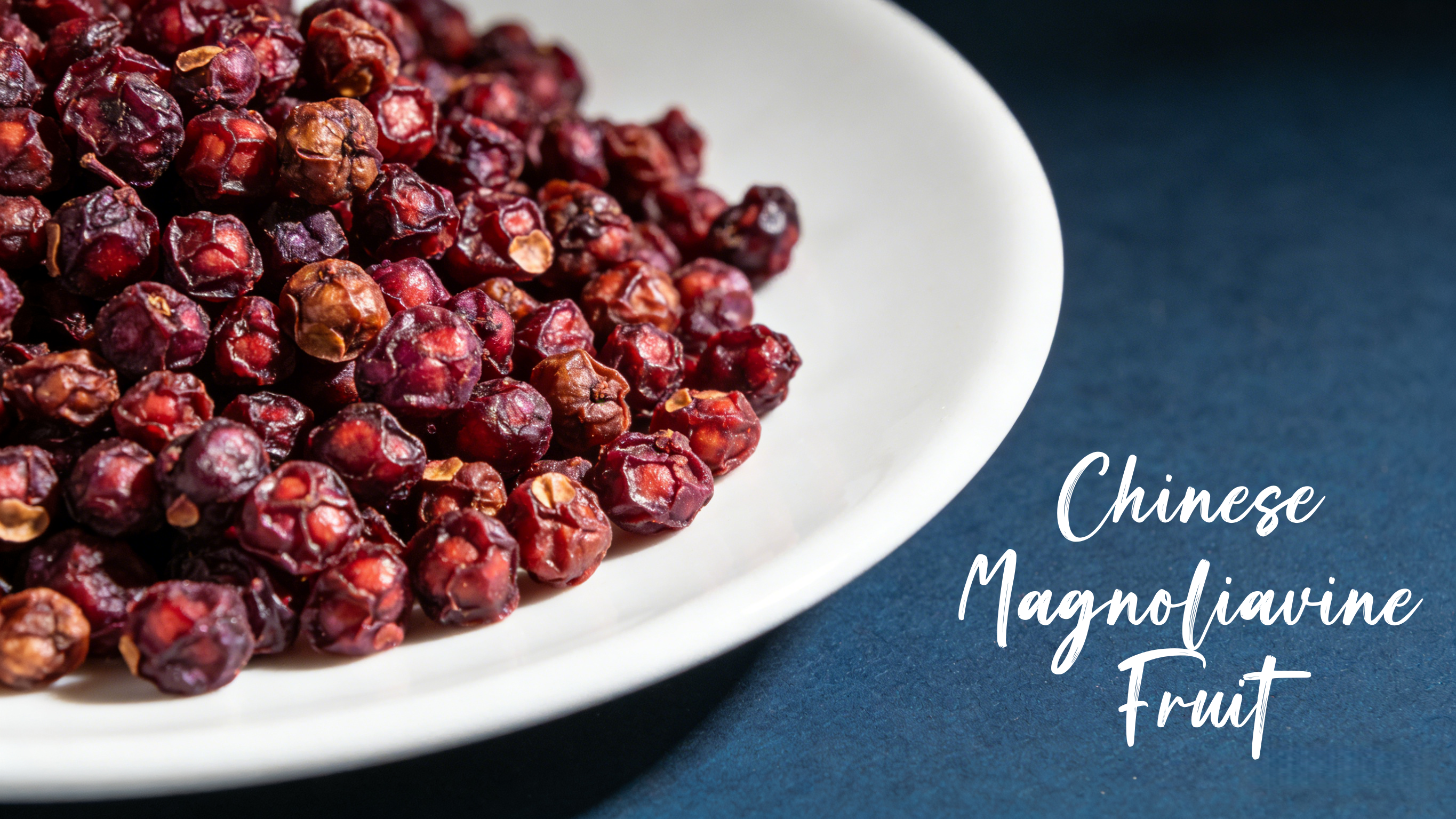
Schisandra, derived from the dried ripe fruit of the plant Schisandra chinensis (Turcz.) Baill., commonly known as "Northern Schisandra," is named for its unique taste profile: the fruit skin is sweet and sour, the seed is pungent and bitter, and the overall fruit carries a salty note—thus embodying all five basic tastes. In traditional Chinese medicine theory, this corresponds to the synergistic regulation of the five organs. This remarkable berry is classified as a superior herb in the Shennong Ben Cao Jing (Divine Farmer's Materia Medica) and has long been celebrated as a "key remedy for nourishing and strengthening the body, and a treasured substance for astringency and consolidation."
II. Authentic Production Area
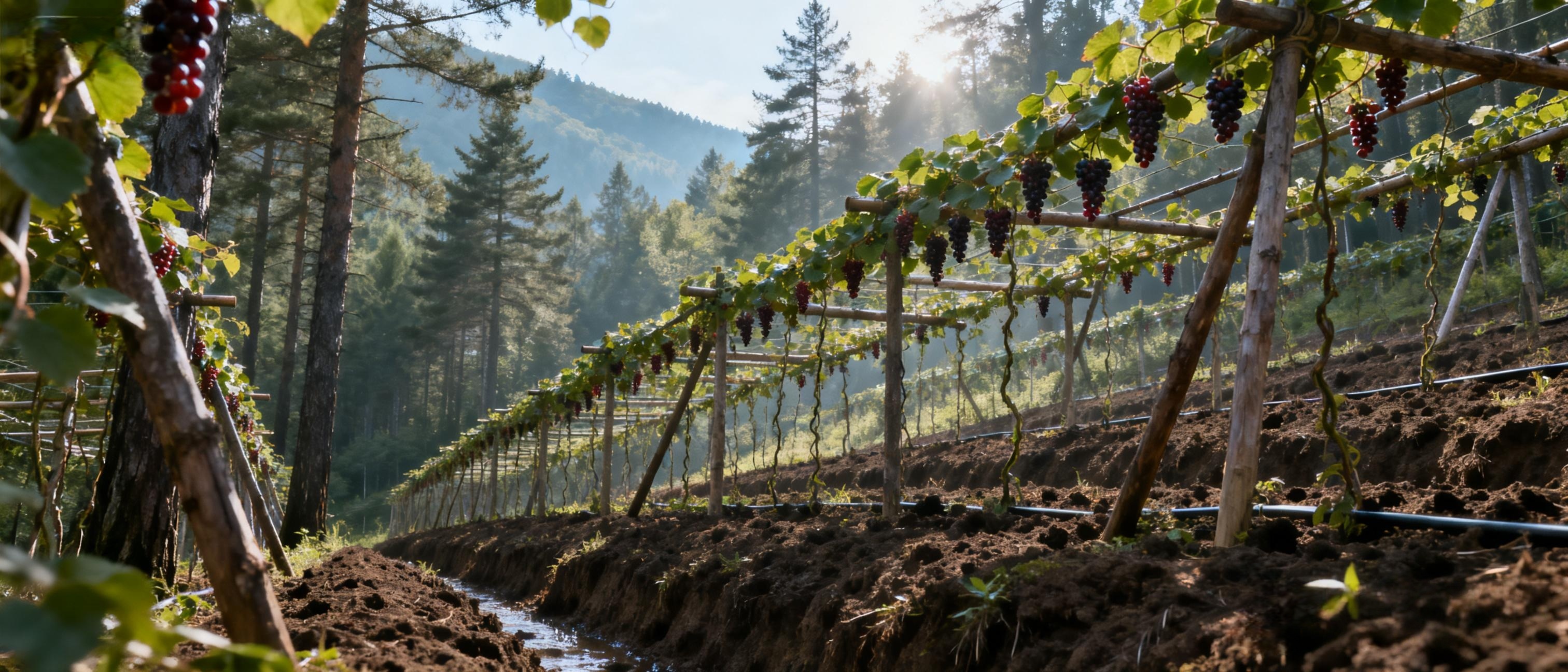
The Changbai Mountains and Xiaoxing'an Mountains regions in Jilin, Liaoning, and Heilongjiang, China, are the genuine producing areas for Schisandra, with Fusong and Dunhua in Jilin renowned for their top-quality produce. This "three-dimensional resource treasure trove" provides Schisandra with a unique growth environment,
Precise Alignment with Vertical Climate Zones
Schisandra grows wild at the edges of mixed coniferous and broad-leaved forests at altitudes of 800–1,500 meters. Artificial cultivation scientifically mimics this ecological niche by selecting semi-shaded slopes (with 60%–70% sunlight exposure) and setting up trellises. This ensures sufficient photosynthesis for the accumulation of sugars and organic acids while avoiding direct strong sunlight that could degrade active components. The producing areas have an annual average temperature of 3–6°C with significant diurnal temperature variations, which favors the enrichment of lignan-based active components in the fruits.
Forest-Herb Composite Ecological Planting System
Utilizing a "wild-simulated understory cultivation" model, Schisandra vines climb on natural trees or artificial supports. The thick humus layer (30–50 cm) beneath the forest provides loose, moist, and organically rich soil conditions. A scientifically designed "three-ditch integrated" drainage system (furrow ditches, waist ditches, and perimeter ditches) ensures that the roots do not become waterlogged during rainy seasons while maintaining soil moisture during dry periods. This alternating dry-wet microenvironment has been proven to stimulate Schisandra to synthesize more secondary metabolites.
Harvest Timing and Precision Processing
Harvesting takes place around the first frost in autumn when the fruits turn deep red and develop a "white frost" on the surface (a sign of fructose and active component exudates). The "gradient variable-temperature drying technology" is employed: first, low-temperature drying at 35–40°C until the fruits are 70% dry to prevent rapid water loss and hardening of the peel; then, drying at 50–55°C until fully dry. This process increases the retention rate of the fruit's primary active components to over 90%, resulting in finished products with a purplish-red hue and plump, fleshy texture.
III. Quality Identification
High-quality Schisandra
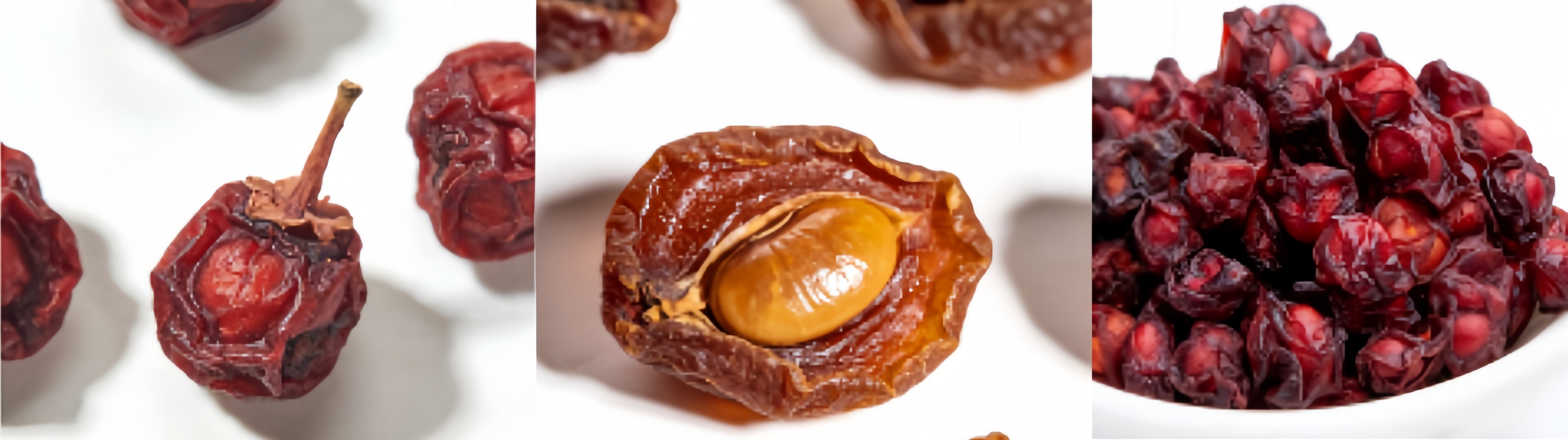
The fruits are irregularly spherical or oblate, with a diameter of 5–8 mm. The surface appears purplish-red to dark red, wrinkled yet oily and glossy, with soft and thick flesh. The peel adheres tightly to the seeds and is not easily separated. It emits a rich, complex fruity aroma with subtle notes of wine. When tasted, all five flavors are present: sweetness and sourness are prominent, followed by well-balanced pungent, bitter, and salty aftertastes. Overall, the taste is robust and full-bodied. When soaked in warm water, the fruits gradually unfurl, and the solution slowly turns into a beautiful amber-red color without becoming cloudy over time. The texture is pliable and resilient, offering a springy feel when held in hand.
Ordinary/Inferior Schisandra
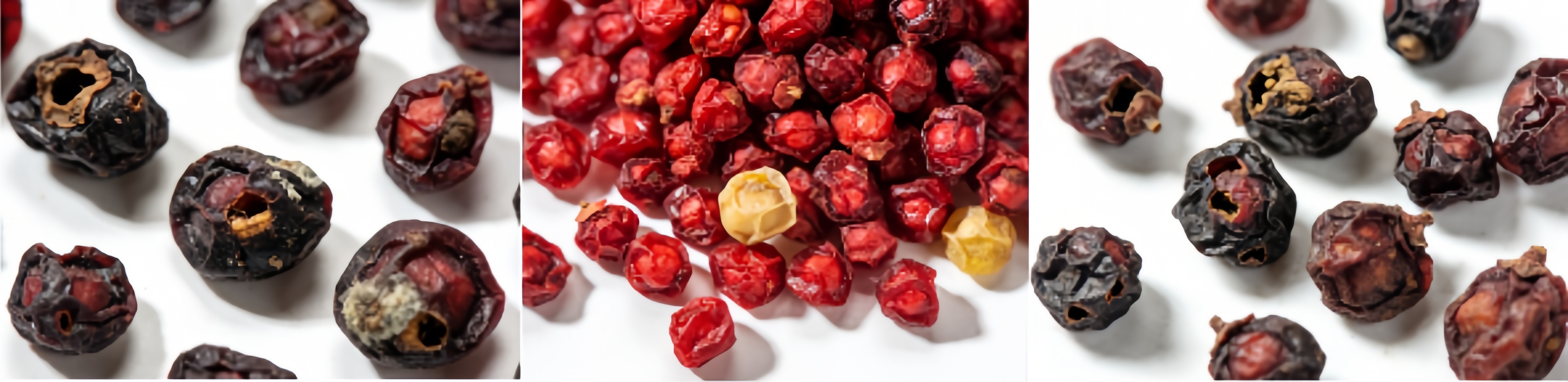
The fruits appear shriveled, small, and underdeveloped, often with unnaturally bright and uniform colors—such as vivid red, bright red, or pale yellow (over-sulfur fumigation may cause discoloration). The flesh is thin and hard. The peel easily separates from the seeds, or the batch is mixed with a significant amount of stems, leaves, or other impurities. The aroma is faint, or carries musty or rancid notes. The taste is monotonous, predominantly sour and astringent, or nearly flavorless. When soaked, the solution quickly turns dark red or becomes cloudy, and the fruits tend to break apart or disintegrate easily. The texture is either brittle and hard or unpleasantly damp and sticky to the touch.
IV. Main Chemical Components
Lignan Compounds- These are the most characteristic components of Schisandra, forming the core of its hepatoprotective, antioxidant, anti-fatigue, and neuroprotective properties. They enhance cellular energy metabolism and help protect the body from stress-induced damage.
Organic Acid Complex- Including malic acid, citric acid, tartaric acid, and others, this group serves as the material basis for Schisandra's sour taste and its effects in promoting salivation and relieving thirst. It also aids in mineral absorption.
olatile Oils and Polysaccharides- These contribute to its distinctive aroma and provide auxiliary functions such as immune regulation and skin moisturization.
V. Core Efficacy
Schisandra is warm in nature, with sour and sweet tastes, and targets the Lung, Heart, and Kidney meridians. Its core efficacy lies in "consolidating and retaining, supplementing qi and promoting fluid production, tonifying the kidneys, and calming the heart." Modern research has revealed its significant "adaptogen-like" effects, helping the body resist stress and restore balance. Through the external application of "bath infusion bags," its benefits can be efficiently absorbed and utilized via the skin—the body's largest organ.
▪ Supplementing Qi and Consolidating the Exterior, Improving Spontaneous Sweating and Fatigue
For conditions such as spontaneous sweating or night sweats due to qi deficiency, excessive sweating after exercise, and fatigue and weakness caused by chronic fatigue syndrome, Schisandra can consolidate and reduce sweating, supplement qi, and restore pulse vitality. Its abundant organic acids and polysaccharides, enhanced by the synergy of hot water, are absorbed through the skin to regulate the opening and closing of pores and improve superficial microcirculation. Through the meridian connection of "the lungs govern the skin and hair," it indirectly tonifies the defensive qi of the lungs, reduces abnormal sweat loss, and alleviates the depletion of qi following excessive sweating, thereby improving feelings of fatigue.
▪ Calming the Heart and Tranquilizing the Spirit, Promoting Deep Relaxation and Sleep
Schisandra effectively regulates symptoms such as palpitations, insomnia, and vivid dreams caused by heart-kidney imbalance, as well as anxiety and restlessness resulting from work-related stress. The warmth of the bath itself helps relax the body and mind. Unique neuromodulatory active molecules in Schisandra, absorbed through the skin and minimal steam inhalation, gently regulate the central nervous system, helping to lower cortisol levels and induce alpha brain waves to create a state of deep relaxation. This makes it particularly suitable for evening baths to promote sleep.
▪ Nourishing the Kidneys and Securing Essence, Warming the Lower Source
For sub-health conditions related to kidney deficiency and instability, Schisandra gently nourishes kidney qi. The warmth of the herbal bath guides the kidney-meridian-targeting active components of Schisandra toward the lower burner area of the body surface (such as the lumbosacral region). Through local absorption and meridian conduction, it provides gentle warming and consolidating effects, making it suitable for daily maintenance.
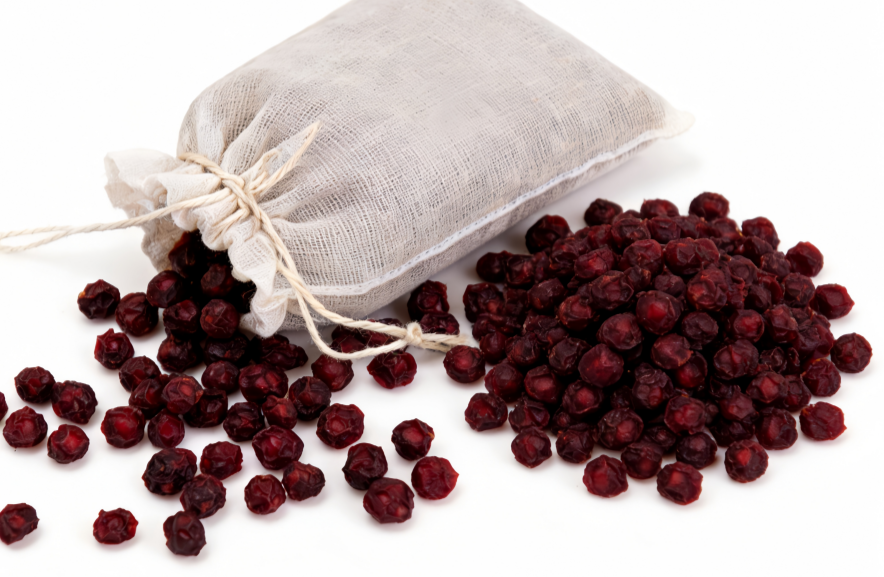
Click here to see our adaptogen bath soak with Schisandra.