I.Base Origin Information:
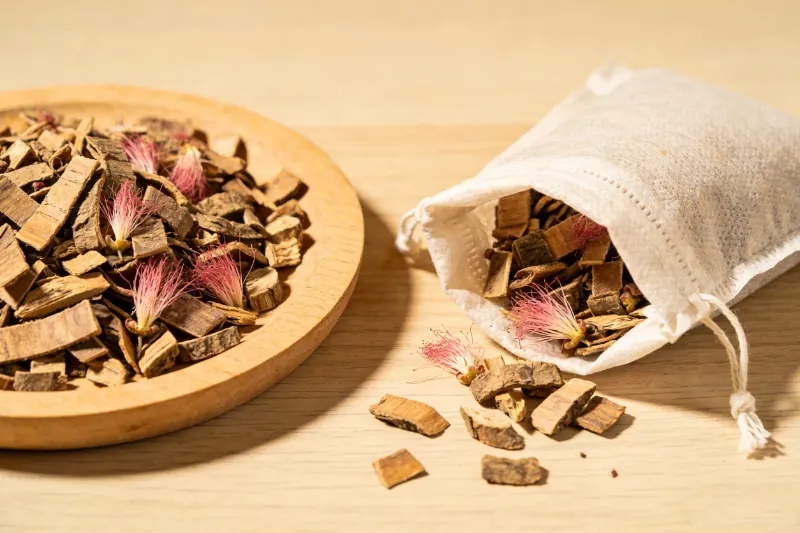
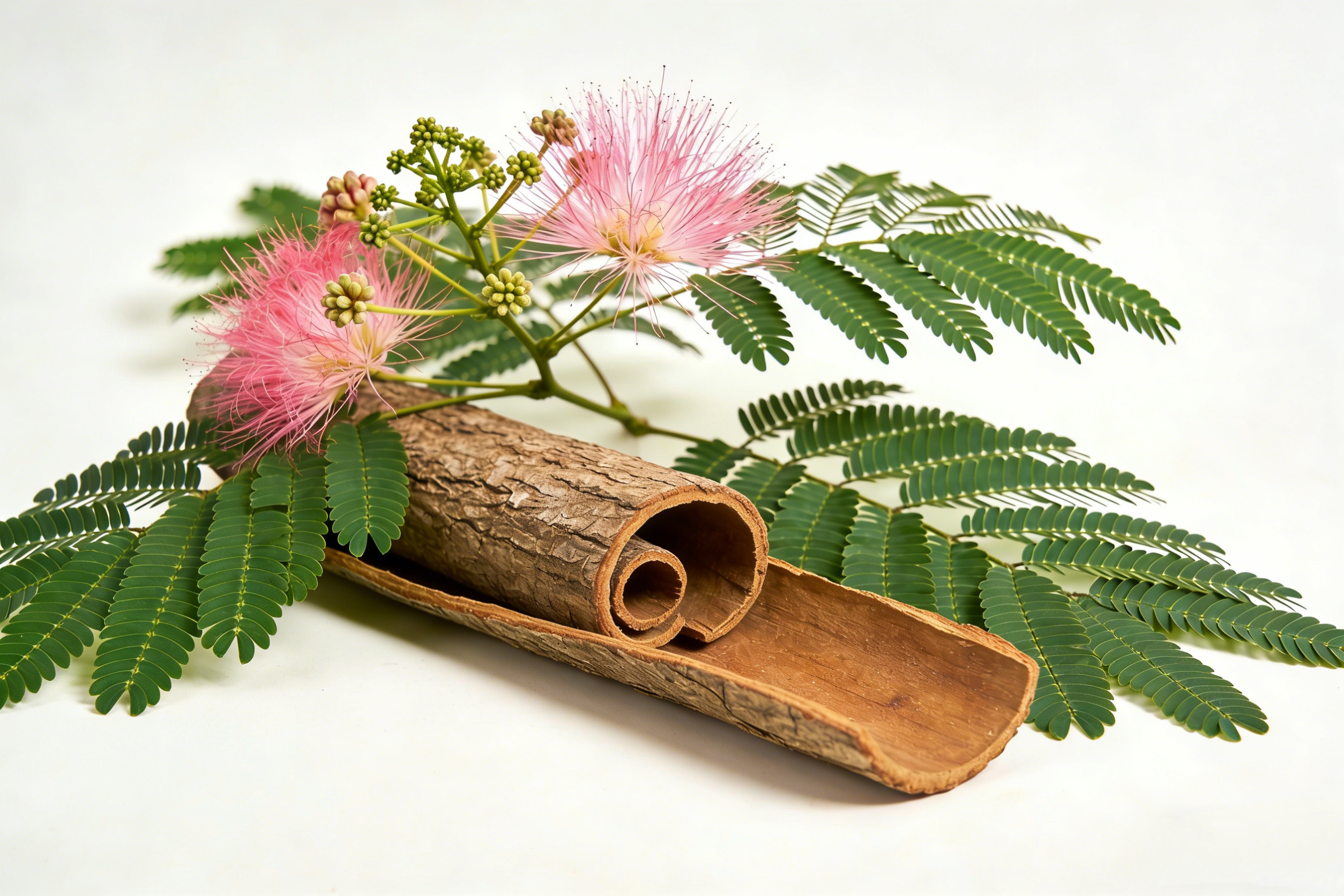
Silktree albizia bark, with the Latin name ALBIZZIAE CORTEX, is the dried stem bark of the plant Albizia julibrissin Durazz., which belongs to the Fabaceae family. This tree, characterized by its bipinnate leaves and pink, silky flowers, has carried the cultural connotation of "alleviating anger through harmony" since ancient times and holds a unique position in the system of traditional Chinese medicine. Since its inclusion in the Shennong's Classic of the Materia Medica, Silktree albizia bark has been documented to have the effects of "calming the five viscera, harmonizing the mind and will, and making one joyful and free from sorrow." Its Chinese name, "He Huan" (meaning "together happiness"), vividly reflects its core therapeutic value of resolving depression and calming the mind. The bark is tough in texture, with a fibrous fracture surface and a slight fragrance. It is a characteristic medicinal material in the treatment of emotional disorders in traditional Chinese medicine.
View more introductions to Chinese medicinal herbs.
II. Authentic Production Area:
Hubei, Jiangsu, Zhejiang, Anhui, and other areas in the middle and lower reaches of the Yangtze River in China are the traditional genuine producing regions for Silktree albizia bark. Among these, the quality of the bark produced in Xiangyang, Hubei; Suzhou, Jiangsu; and Hangzhou, Zhejiang is considered the finest. The warm and humid climate of these regions, combined with scientific tending and management, collectively ensures its outstanding medicinal properties:
Scientific Adaptation to Geography and Climate:
The silktree prefers warm, humid environments and full sunlight, and it is somewhat tolerant of drought and poor soil. The genuine producing regions are typically located in subtropical monsoon climate zones, with an average annual temperature of 15-18°C and an annual precipitation of 1000-1400 millimeters. Deep, fertile, well-drained slightly acidic to neutral loam soil is most suitable for the tree's growth and the accumulation of active components such as triterpenoid saponins and flavonoids in its bark. Adequate sunlight is conducive to the conversion of photosynthetic products into secondary metabolites.
Forest-Medicine Integrated Ecological Cultivation System:
The producing regions often employ a tending model that "combines landscaping with medicinal material production," planning and planting the silktree as a street tree, garden tree, or ecological forest species. Key management techniques include: selecting robust plants aged over 10 years as the target for bark harvesting; employing "rotational harvesting by stages," meaning only a portion of the bark is harvested each time in a ring-like pattern, and the wound is treated with a protective agent to allow healing and regeneration, thereby achieving sustainable utilization; collecting bark from pruned branches during regular landscaping pruning; and implementing scientific "integrated water and fertilizer management," applying appropriate amounts of organic fertilizer before sprouting in spring and during the vigorous growth period in summer to promote tree recovery and the synthesis of active components.
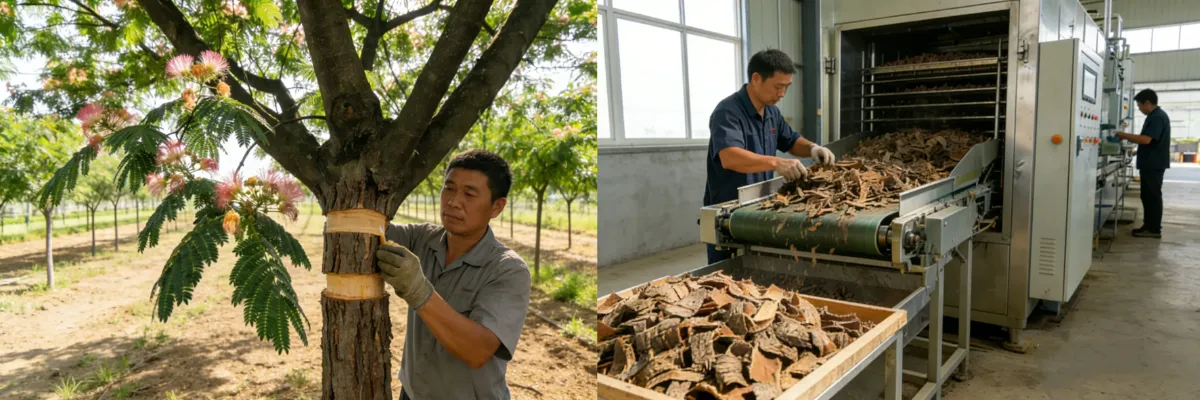
"Efficacy-Preserving" Techniques in Harvesting and Processing:
Harvesting takes place in summer and autumn. At this time, sap flow is vigorous, the cortex separates easily from the xylem, and the content of active ingredients is relatively high. After harvesting, the rough outer bark and impurities are removed, and the material is sun-dried. Modern processing emphasizes "low-temperature (≤60°C) rapid drying" to maximize the retention of heat-sensitive active components and prevent mold or component oxidation caused by prolonged sun-drying. After drying, it should be stored sealed in a cool, dry place to prevent loss of fragrance and moisture damage.
III. Quality
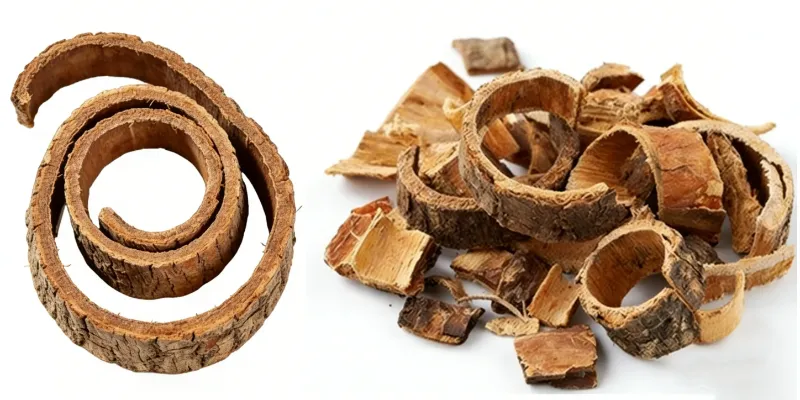
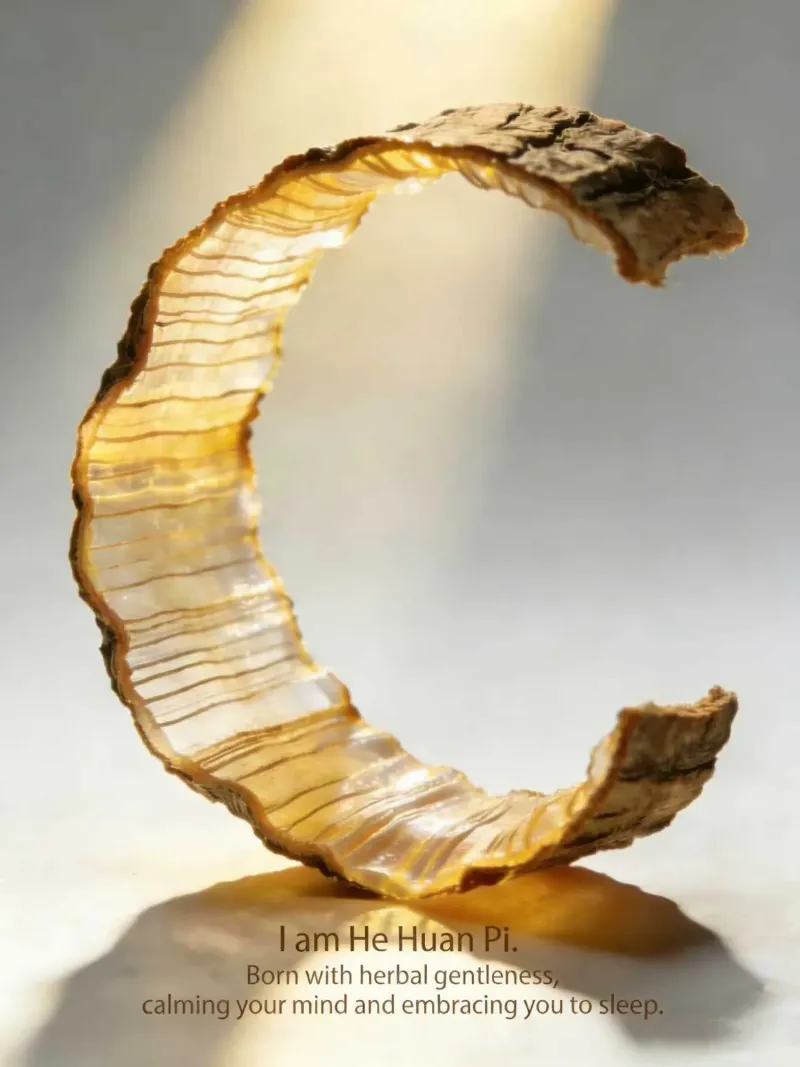
High-quality Silktree albizia bark: appears in rolled cylindrical or semi-cylindrical pieces, varying in length and of uniform thickness (typically 2-7 mm). The outer surface is grayish-brown to grayish-brown, marked with slight longitudinal wrinkles and densely covered with prominent brown or reddish-brown elliptical, transverse lenticels. The inner surface is light yellowish-white, smooth, with fine longitudinal striations. The texture is hard and brittle, breaking easily. The fracture surface is fibrous and flaky, displaying a light yellowish-brown or yellowish-white color. It has a slight fragrance and a mild, slightly astringent taste with a mild irritating sensation on the tongue.
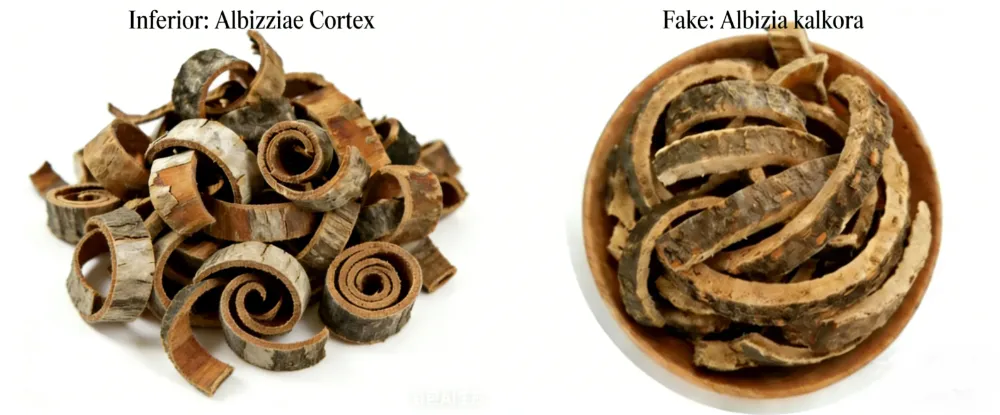
Ordinary/Inferior Silktree albizia bark: The bark is thin and fragmented, with poor curling. The outer surface appears grayish-black (due to dampness and mold), pallid white (possibly from sulfur fumigation), or exhibits mottled and uneven coloring. Lenticels are sparse or inconspicuous, and there may be moss or lichen attached. The inner surface is rough or dark in color. The texture is either pliable but tough, or dry and easily broken. The fractured surface is not very fibrous or appears granular. The odor is faint or absent, possibly with a musty smell. The taste is bland, without the characteristic slight irritating sensation in the throat.
IV.Main Chemical Components
1.Triterpenoid Saponins: These are its characteristic active components, closely related to its central nervous system regulatory effects such as sedation, hypnosis, and antidepressant activity. They constitute the core material basis for its efficacy in "calming the mind and resolving depression."
2.Flavonoids: These possess synergistic effects including antioxidant, anti-inflammatory, and cardioprotective and cerebroprotective actions. They may be involved in its processes of improving circulation, invigorating blood, and reducing swelling.
3.Lignans and Tannins: These contribute to its partially astringent taste and may exhibit activities such as antibacterial and astringent effects.
V. Core Efficacy
Silktree albizia bark is neutral in nature and sweet in taste. Its meridian tropism are the heart, liver, and lung meridians. Its core efficacies are "resolving depression and calming the mind, and invigorating blood and reducing swelling." Its mind-calming power focuses on achieving its effect by resolving liver depression and gladdening the heart and mind. Its nature is mild and free from the drawback of being harsh or drying. Through external application in the form of a "bath soak bag," its medicinal properties can leverage the warmth and circulating power of the water to penetrate the skin, exerting a unique effect of "co-regulating the body and mind."
Relieves Depression and Calms the Mind, Soothes Emotions and Promotes Sleep:
It effectively regulates symptoms such as restlessness, irritability, insomnia, and forgetfulness caused by emotional distress, anger, or depression, uplifting the spirit and bringing a sense of joy. The warm environment during bathing itself aids relaxation. The mind-calming active components in Silktree albizia bark are absorbed through the skin, while its subtle fragrance regulates the body through respiration, gently alleviating psychological stagnation and easing tension and anxiety. This helps create a calm and relaxed state, laying the foundation for peaceful sleep at night.Who would be suitable to use adaptogen bath soak?
Activates Blood Circulation and Reduces Swelling, Improves Skin and Joint Health:
Used for traumatic injuries, fractures, swelling, and pain, it activates blood circulation, dispels stasis, and promotes tendon and bone healing. It is also employed for lung abscesses and sores with swelling and toxicity. Its "blood-activating" components, aided by hot water, improve blood circulation in the body surface and extremities, helping to disperse local bruising and swelling. For post-exercise muscle soreness, mild sprains, or chronic joint discomfort, an Silktree albizia bark herbal bath can provide gentle blood-activating, tendon-relaxing, and swelling-relieving effects.
Harmonizes Blood and Moisturizes the Skin, Supports Skin Health:
Its blood-activating properties help improve skin microcirculation. When used in herbal baths, it may promote skin metabolism and contribute to maintaining healthy skin. With its mild nature, it is suitable for long-term maintenance and care.
Click here to see our adaptogen bath soak with Albizziae Cortex.