I.Base-Ursprungsinformationen:
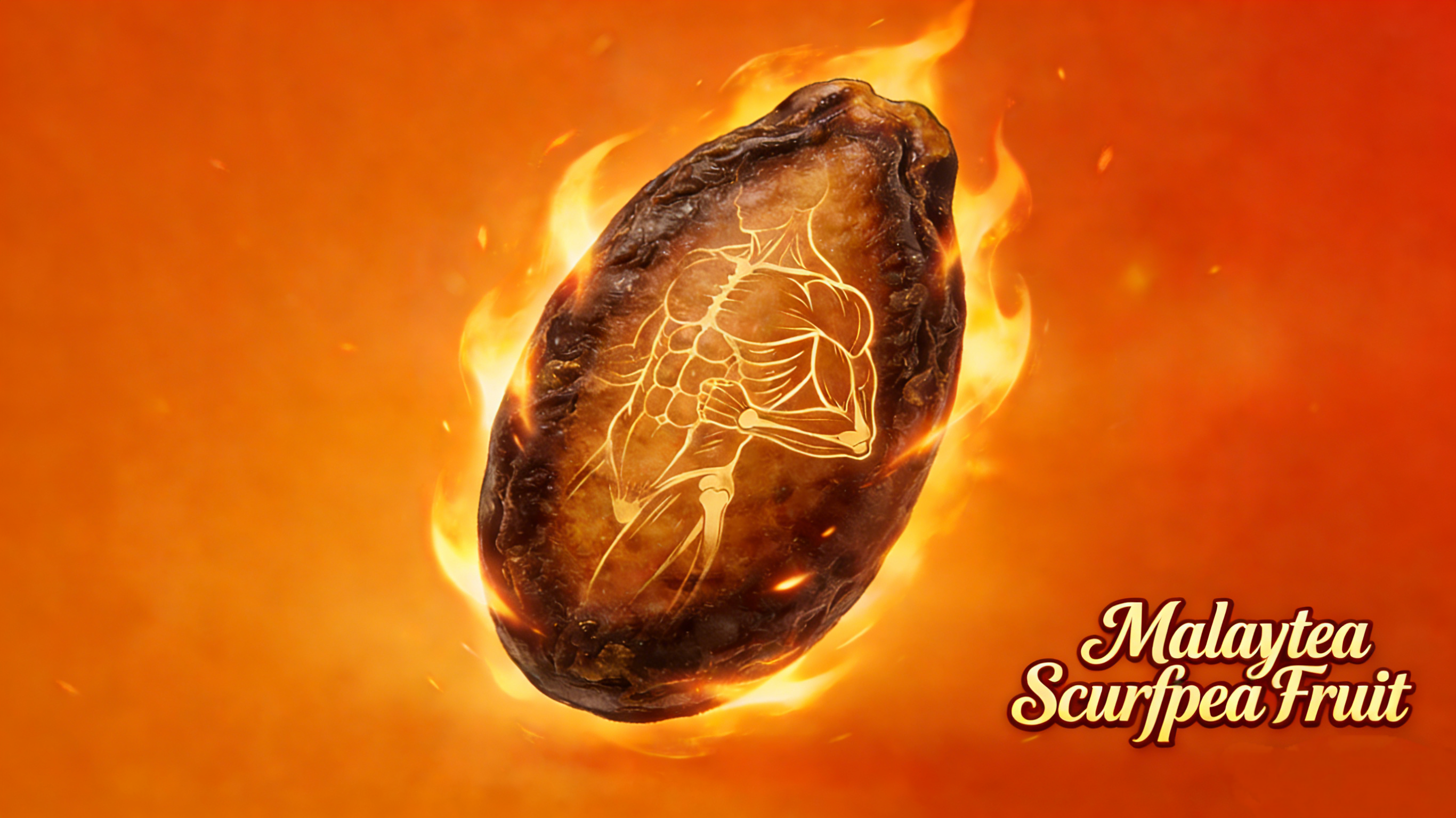
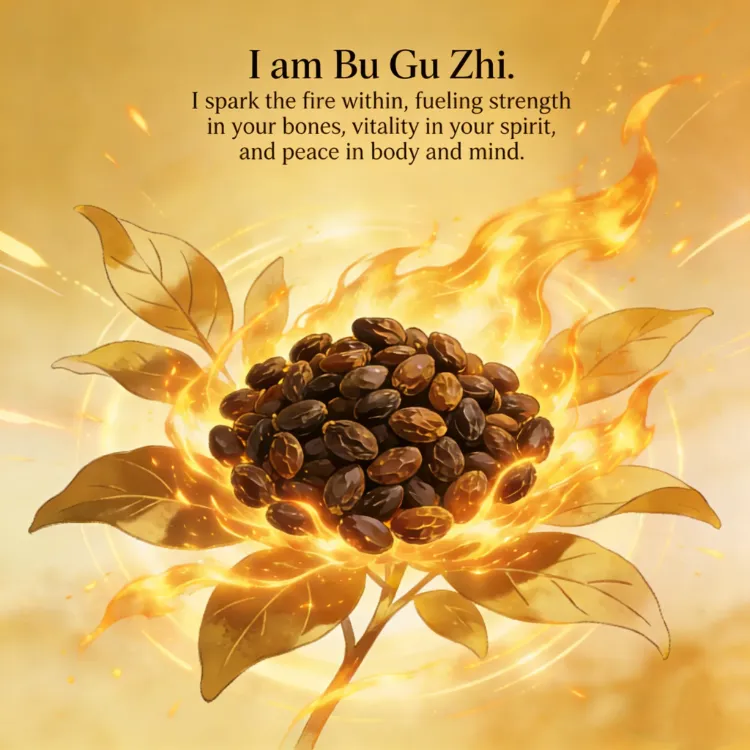
Malaytea Scurfpea Fruit, mit dem lateinischen Namen PSORALEAE FRUCTUS, ist die getrocknete, reife Frucht der Hülsenfruchtpflanze Psoralea corylifolia L. Dieser einzigartig aussehende Samen, so dunkel wie Kohle, ist ein klassisches und essentielles Kraut in der Traditionellen Chinesischen Medizin zur Erwärmung der Nieren und Unterstützung des Yang, zur Sicherung des Essenz und zur Reduzierung des Urinierens sowie zur Förderung der Qi-Aufnahme zur Linderung von Keuchen. Seine Wirkungen zur Stärkung der Nieren und des Yang sind seit dem Kaibao Materia Medica klar dokumentiert. Der Name "Bu Gu Zhi" (wörtlich "Knochenfett ergänzen") weist direkt auf seine funktionale Essenz hin – es kann "die Knochen ergänzen und das Mark erzeugen", was die Sehnen und Knochen stärkt. Aufgrund seiner scharfen, warmen Natur und seiner fokussierten und starken Wirkung zur Stärkung des Nieren-Yang wird es als "Samen des robusten Feuers" gepriesen, um Muster der Nieren-Yang-Schwäche und Unsicherheit des unteren Ursprungs zu behandeln. Wir haben premium Malaytea Scurfpea Fruit zu unserem hinzugefügt.Kräuterbadebeutel, klickenHierum weitere Einblicke in die Gesundheit zu gewinnen.
II. Authentisches Produktionsgebiet:
Die Hauptproduktionsgebiete für Malaytea Scurfpea Fruit in China sind die Provinzen Sichuan, Henan, Anhui und Shanxi. Unter diesen gelten die in Hechuan (Sichuan), Shangqiu (Henan) und Fuyang (Anhui) produzierten Früchte als die authentischsten und qualitativ hochwertigsten. UnserKräuterbadebeutelDie Zutaten werden sorgfältig aus diesen hochwertigen Anbaugebieten ausgewählt. Diese Regionen verfügen über reichlich Licht- und Wärmequellen, die die Entwicklung eines wissenschaftlichen Anbau- und Managementsystems erleichtern:
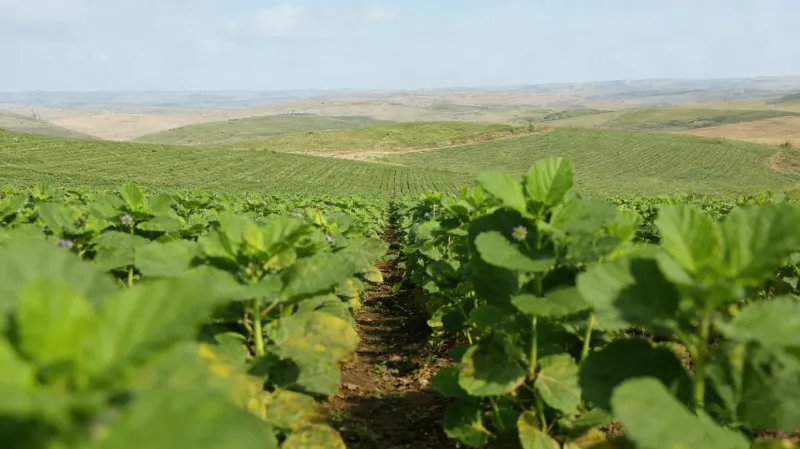
Wissenschaftliche Anpassung an Geographie und Klima: Malaytea Scurfpea gedeiht in warmen, feuchten Klimazonen mit reichlich Sonnenlicht. Die authentischen Produktionsgebiete befinden sich typischerweise in Ebenen und hügeligen Regionen zwischen 30-35 Grad nördlicher Breite, mit einer durchschnittlichen Jahrestemperatur von 14-18°C, einer jährlichen Niederschlagsmenge von 800-1200 mm und einer langen frostfreien Periode. Tiefe, fruchtbare, gut durchlässige sandige Lehmböden oder Auenböden sind besonders geeignet für das tiefe Wachstum seines Pfahlwurzelsystems. Ausreichendes und intensives Sonnenlicht ist ein entscheidender ökologischer Faktor, der die Entwicklung der Frucht (Hülsenfrucht) fördert, pralle Samen sichert und die Synthese von hochkonzentrierten lichtempfindlichen aktiven Inhaltsstoffen wie Coumarinen und Flavonoiden erleichtert.
Präzisions-Feldökologisches Management:
1.Saatgutbehandlung und Aussaat: Vor der Aussaat werden die Samen häufig in warmem Wasser eingeweicht, um die Ruhephase zu brechen und die Keimrate zu verbessern. Die Anbauweise in Reihen oder Beeten wird verwendet, um die Entwässerung und das Feldmanagement zu erleichtern.
2. Es wird das Prinzip "früh fördern, mittel kontrollieren, spät schützen" befolgt. Stickstoffdünger wird in der Sämlingsphase angewendet, um das Wachstum zu fördern; während der Blüte- und Schotenbildungsphase wird Stickstoff kontrolliert, während Phosphor, Kalium und Spurenelemente (wie Bor und Molybdän) erhöht werden, um die Fruchtansätze und die Samenfüllung zu verbessern. In der späteren Phase werden Blattdüngungen mit Kaliumdihydrogenphosphat verwendet, um vorzeitiger Alterung vorzubeugen.
3.Integrierte grüne Schädlings- und Krankheitsbekämpfung: Für Krankheiten, gegen die sie anfällig ist, wie Wurzelfäule und Mehltau, werden grüne Präventions- und Bekämpfungsmaßnahmen ergriffen, einschließlich der Auswahl von krankheitsresistenten Sorten, rationaler Fruchtfolge (z.B. mit Getreidepflanzen) und dem Einsatz von biologischen Pestiziden. Streng auf den Sicherheitszeitraum vor der Ernte für Pestizide wird geachtet.
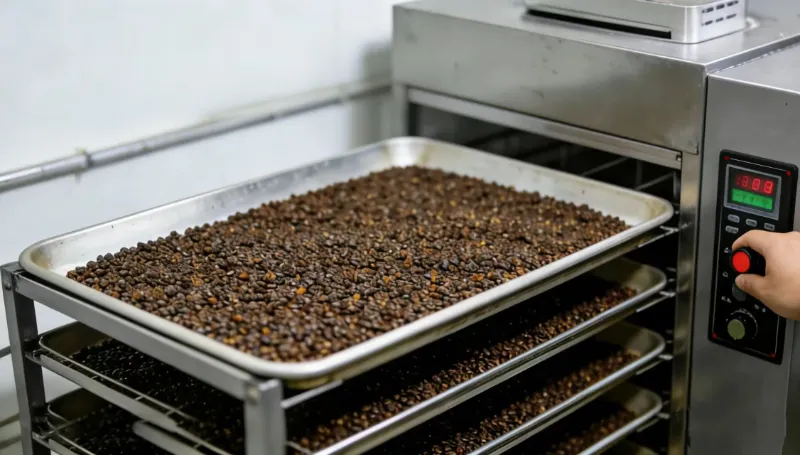
Die Kunst der "Wahrung der Wirksamkeit" bei Ernte und Verarbeitung: Die Ernte erfolgt in Chargen im Herbst, wenn die Früchte reif sind und das Perikarp schwarz wird. Nach der Ernte werden sie umgehend in der Sonne oder mit Niedertemperatur-(≤50°C) Trocknungsmethoden getrocknet. Die Früchte werden dann gedroschen, um die Samen zu gewinnen, und das Perikarp sowie Verunreinigungen werden entfernt. Die moderne Verarbeitung legt besonders Wert auf "Trocknung und Lagerung geschützt vor Licht", da die Kernbestandteile (wie Psoralen und Isopsoralen) lichtempfindlich sind und bei längerer Exposition zur Zersetzung neigen. Hochwertige Produkte werden oft mit lichtgeschützten Lufttrocknungsgeräten getrocknet und in braunen Behältern gelagert, um die Beibehaltung ihrer lichtempfindlichen Aktivität und medizinischen Wirksamkeit zu maximieren.
III. Qualität
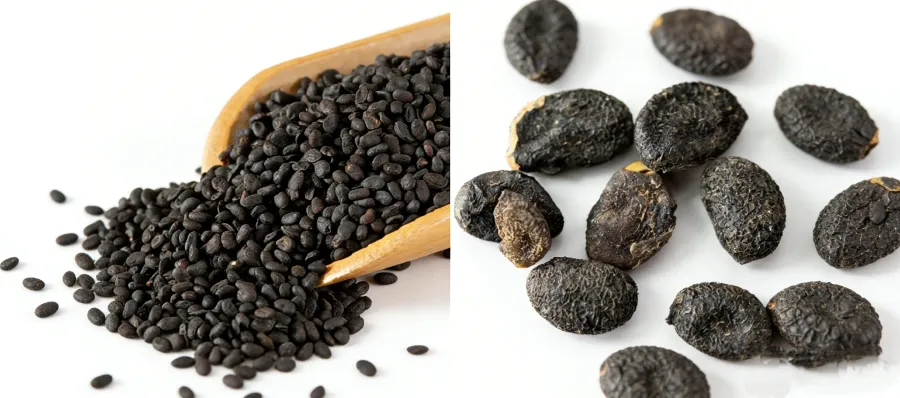
Hochwertige Malaytea Scurfpea-Frucht: Die Frucht ist nierenförmig, leicht abgeflacht, misst 3-5 mm in der Länge und 2-4 mm in der Breite. Ihre Oberfläche ist schwarz, schwarzbraun oder graubraun, mit feinen, netzartigen Falten. Der einzelne Samen im Inneren ist gelblich-braun, glatt und reich an Öl. Die Textur ist hart und nicht leicht zu brechen. Sie hat ein charakteristisches Aroma (ein reichhaltiger, verbrannter und scharfer Duft) und einen Geschmack, der scharf und leicht bitter ist. Wenn eine kleine Menge in Wasser gegeben wird, schwimmen hochwertige Früchte oft oder sinken langsam aufgrund ihres Ölgehalts, ohne das Wasser signifikant zu verfärben. Beim Rösten über einem Feuer wird das Aroma noch intensiver und reiner.
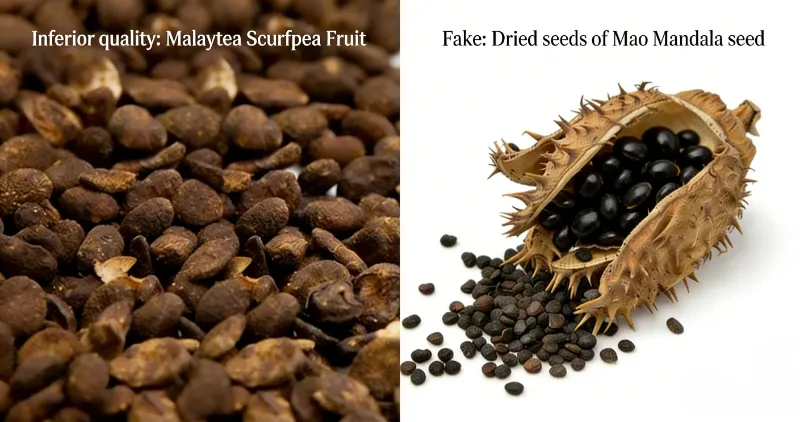
Ordinary/Inferior Malaytea Scurfpea Fruit: Die Früchte sind geschrumpft, dünn, klein und unregelmäßig geformt. Die Oberfläche erscheint graugelb oder gelbbraun (was auf unzureichende Reife oder Schwefeldämpfung hinweist) oder matt grau (was auf Feuchtigkeit hindeutet), mit groben Falten. Die Samen sind geschrumpft und haben keinen öligen Glanz. Die Textur ist spröde, leicht oder feucht und weich. Das Aroma ist schwach, oder es kann ein schimmeliges oder ranziges Geruch vorhanden sein. Der Geschmack ist fade. Sie sinken schnell im Wasser (möglicherweise aufgrund von eingemischtem Sediment), oder das Wasser kann sich verfärben und trüb werden. Beim Rösten ist das Aroma nicht ausgeprägt, oder es kann ein verbrannter, unangenehmer Geruch auftreten.
IV. Hauptbestandteile der chemischen Zusammensetzung
1. Sesquiterpenalkohole (hauptsächlich Santalol): Diese sind die Hauptbestandteile, die für das charakteristische süße, milde und holzige Aroma von Sandelholz verantwortlich sind. Sie dienen auch als materielle Grundlage für die wesentlichen pharmakologischen Wirkungen, wie sedative, anxiolytische, entzündungshemmende und antibakterielle Eigenschaften. Diese Verbindungen sind chemisch stabil und zeigen eine langanhaltende Duftretention.
2. Andere Sesquiterpene und Aldehyd/Keton-Verbindungen: Diese tragen zur geschichteten Komplexität seines Aromas bei, einschließlich rauchiger Nuancen und subtiler cremiger Noten. Sie bieten auch synergistische Hilfseffekte, wie Hautreparatur und Anti-Aging-Vorteile.
V. Kernwirksamkeit
Malaytea Scurfpea Fruit hat eine warme Natur, einen scharfen und bitteren Geschmack und wirkt auf die Nieren- und Milzmeridiane. Seine Hauptwirkungen sind "die Nieren zu wärmen und das Yang zu unterstützen, die Qi-Aufnahme zu fördern, um Asthma zu lindern, und die Milz zu wärmen, um Durchfall zu stoppen." Seine Natur ist scharf-warm, trocken und intensiv, geschickt darin, das Feuer des Lebenstors zu ergänzen, das ursprüngliche Yang zu stärken und die untere Quelle zu konsolidieren. Bei äußerlicher Anwendung in Form von einem "Kräuterbadebeutel„seine scharfen, durchdringenden und bewegenden Eigenschaften können die Wärme des Wassers nutzen, um tief in die Haut, das Fleisch, die Sehnen und die Knochen einzudringen und seine einzigartige Funktion auszuüben, „die Innenseite von außen zu wärmen und das Fundament zu stärken.“
Kann ich nach dem Abschluss des Adapthgen-Bades ein kaltes Bad nehmen?
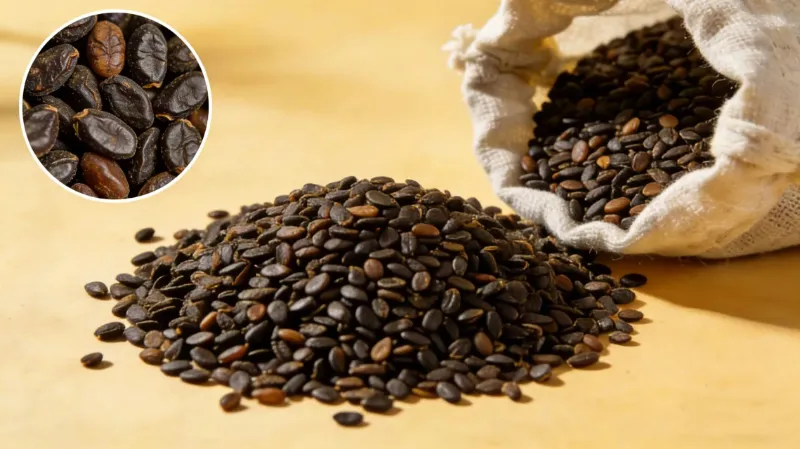
Klicken Sie hier, um unser Adaptogen-Badewasser mit Malaytea Scurfpea Fruit zu sehen.
Qi-Fluss fördern und die Mitte wärmen, Kälte-Schmerzen in der Brust und im Bauch lindern:
Es hat einen signifikanten Effekt auf Kälte-Schmerzen, Muskelverspannungen, Schwäche, Kälteempfindlichkeit und kalte Gliedmaßen im Bereich der Taille und Knie, die durch eine Insuffizienz des Nieren-Yang und einen Rückgang des Lebensfeuer verursacht werden, und stärkt effektiv Sehnen und Knochen. Seine scharf-warmen, trockenen und intensiven Eigenschaften synergieren mit dem heißen Wasser und erzeugen einen kraftvollen wärmenden und durchblutenden Effekt. Nach der transdermalen Absorption zielen seine aktiven Komponenten besonders auf den lumbosakralen Bereich und die unteren Gliedmaßen ab, die vom Nierenmeridian durchzogen werden. Sie vertreiben tiefgehend Kälte-Feuchtigkeitserreger aus den Gelenken und Knochen, fördern die lokale Blutzirkulation und Nährstoffversorgung und lindern so chronische Rückenschmerzen, Knie-Schwäche und Gelenk-Kälte-Schmerzen, die durch Niereninsuffizienz mit Kälte-Stagnation verursacht werden.
Das Herz beruhigen und den Geist entspannen, tiefes Entspannen und Schlaf fördern:
Es wird bei Husten und Keuchen vom Mangel-Kälte-Typ verwendet, die durch das Versagen der Nieren, Qi zu absorbieren, verursacht werden, sowie bei Spermatorrhoe, nächtlichem Samenerguss und häufigem nächtlichem Wasserlassen aufgrund von Unsicherheit des Nieren-Qi. Durch Ganzkörper- oder Unterkörperbäder mit Medikamenten kann seine Kraft des "Wärmens der Nieren und Sicherens" die Haut durchdringen und eine sanfte, aber anhaltende wärmende und sichernde Wirkung auf den unteren Jiao (den Nieren- und Blasenbereich) ausüben. Es hat eine unterstützende regulierende Wirkung auf mildes häufiges Wasserlassen und nächtliches Wasserlassen, die durch Nieren-Yang-Mangel verursacht werden, sowie auf Keuchen vom Mangeltyp bei älteren und schwachen Menschen.
Aromatische Reinigung, Reinigung von Körper, Geist und Umwelt:
Moderne Forschungen zeigen, dass seine aktiven Komponenten die Produktion von Hautpigmentierung unter ultravioletter Strahlung anregen können, und es wird äußerlich zur Behandlung von Vitiligo und Alopecia areata verwendet. Seine feuchtigkeitsentziehenden Eigenschaften bieten bestimmte unterstützende Vorteile für einige Arten von Ekzemen. Dies muss unter professioneller Anleitung verwendet werden. Bei Verwendung in einem medizinischen Bad können seine aktiven Komponenten direkt auf die Haut wirken. Es ist jedoch wichtig zu beachten, dass aufgrund seiner fotosensibilisierenden Natur eine sofortige Sonnenexposition nach der Anwendung vermieden werden sollte, oder es muss möglicherweise mit spezifischer Lichttherapie (wie UVA) kombiniert werden, wobei strikt medizinische Ratschläge befolgt werden müssen.