
I.Base Origin Information
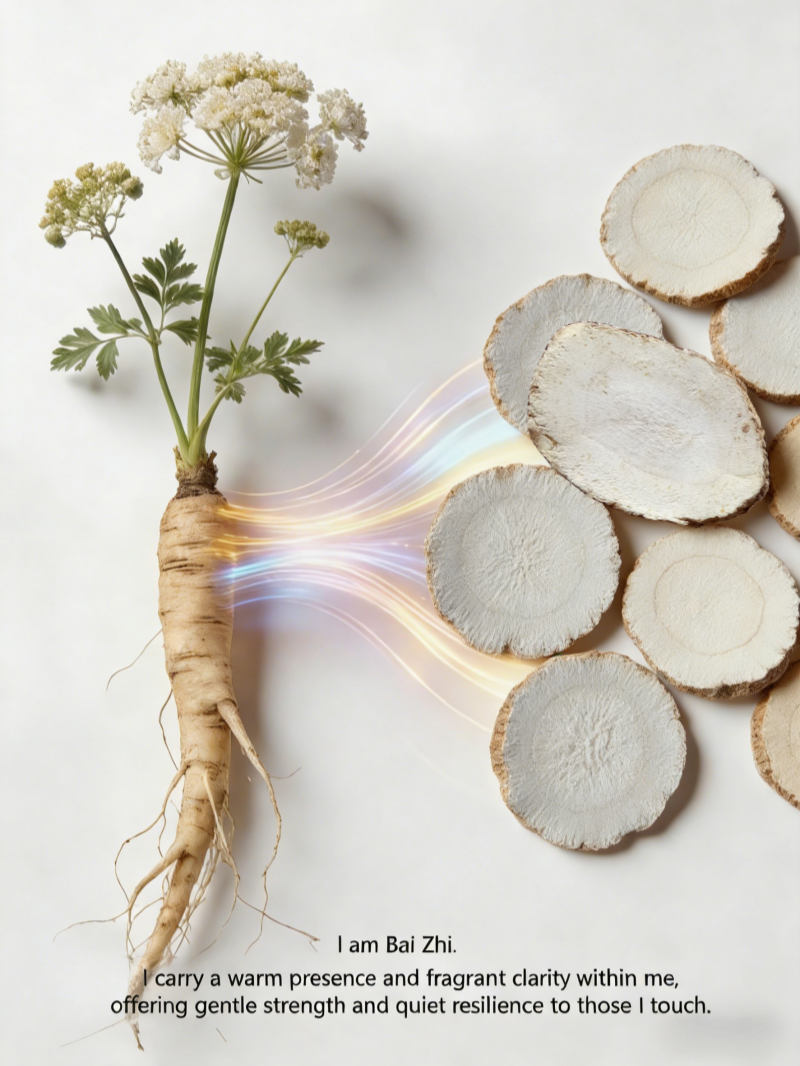
Angelica Dahurica Root, with the Latin name ANGELICAE DAHURICAE RADIX, is the dried root of Angelica dahurica (Fisch. ex Hoffm.) Benth. et Hook. f. or Angelica dahurica var. formosana (Hangzhou Angelica), plants belonging to the Apiaceae family. As a traditional Chinese plant valued for both its aromatic and medicinal properties, Angelica Dahurica Root has been used since ancient times as an important herb for dispelling wind, relieving exterior syndromes, unblocking the orifices, and alleviating pain. It is also praised for its ability to "expel pus, promote tissue regeneration, and moisturize the skin." In the Shennong Ben Cao Jing (Divine Farmer's Materia Medica), it is classified as a middle-grade herb. The Chinese character (zhǐ) in its name originally referred to aromatic plants, vividly reflecting its characteristic intense fragrance and penetrating nature. Its cross-section is as white as powder, which is the origin of the name "Bai Zhi" (White Angelica).
II. Authentic Production Area
Henan (Yu Angelica Dahurica Root), Sichuan (Chuan Angelica Dahurica Root), Zhejiang (Hang Angelica Dahurica Root), and Hebei (Qi Angelica Dahurica Root) are the traditional authentic producing regions for Angelica Dahurica Root in China. Leveraging unique natural conditions and meticulous cultivation techniques, these regions produce high-quality Angelica Dahurica Root with outstanding medicinal efficacys.
Golden Match of Geography and Climate
The authentic producing regions are all located in plains or alluvial river valleys with temperate climates and ample sunlight. The average annual temperature ranges from 14–18°C, with annual precipitation between 800–1200 mm. The deep, fertile, loose, and well-aerated sandy loam or alluvial soil is particularly conducive to the vertical downward growth of the plant's taproot, resulting in robust, plump, and highly aromatic medicinal material. Ample but not excessive sunlight is key for the root to accumulate rich active compounds such as coumarins and volatile oils.

The "Root-Cultivating" Art of Meticulous Farming
Angelica Dahurica Root is a deep-rooted plant, and the core of its cultivation lies in "nourishing the root." Before sowing, the land must be deep-plowed (over 40 cm) and amended with ample well-rotted organic fertilizer as a base fertilizer. During growth, special emphasis is placed on "two critical fertilizations": applying nitrogen fertilizer at the seedling stage to promote leaf growth, and increasing phosphorus and potassium fertilizer during the root expansion period in July-August, supplemented by foliar sprays of trace elements. Scientific water management during this period (keeping the soil moist but not waterlogged) directly determines the root yield and aromatic intensity.
The "Aroma-Preserving" Secret of Harvesting and Processing
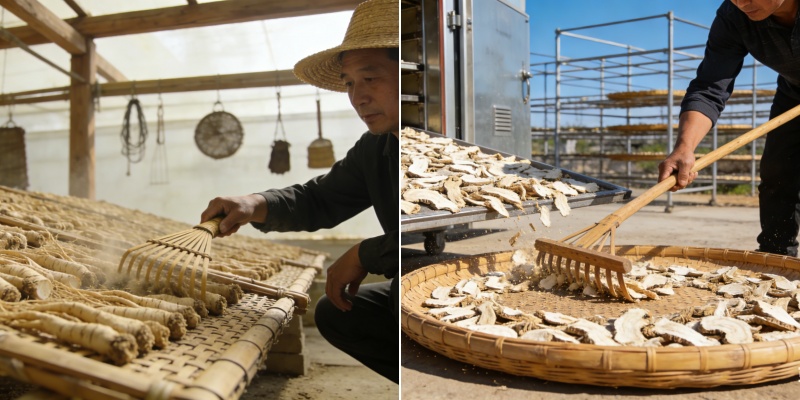
The roots are harvested in the autumn of the second year of planting, when the above-ground parts begin to wither. Immediately after digging, the stems, leaves, and soil are removed, and the roots are placed in a ventilated area to "sweat" for 1–2 days. This allows internal moisture to dissipate evenly, preventing internal mold. Subsequently, a "segmented drying method" is employed: first, low-temperature baking at 40–45°C until semi-dry to lock in the aroma maximally; then, sun-drying until completely dry. Products processed this way exhibit a pure white, highly starchy (floury) cross-section, with the aroma perfectly preserved.
III. Quality
High-Quality Angelica Dahurica Root
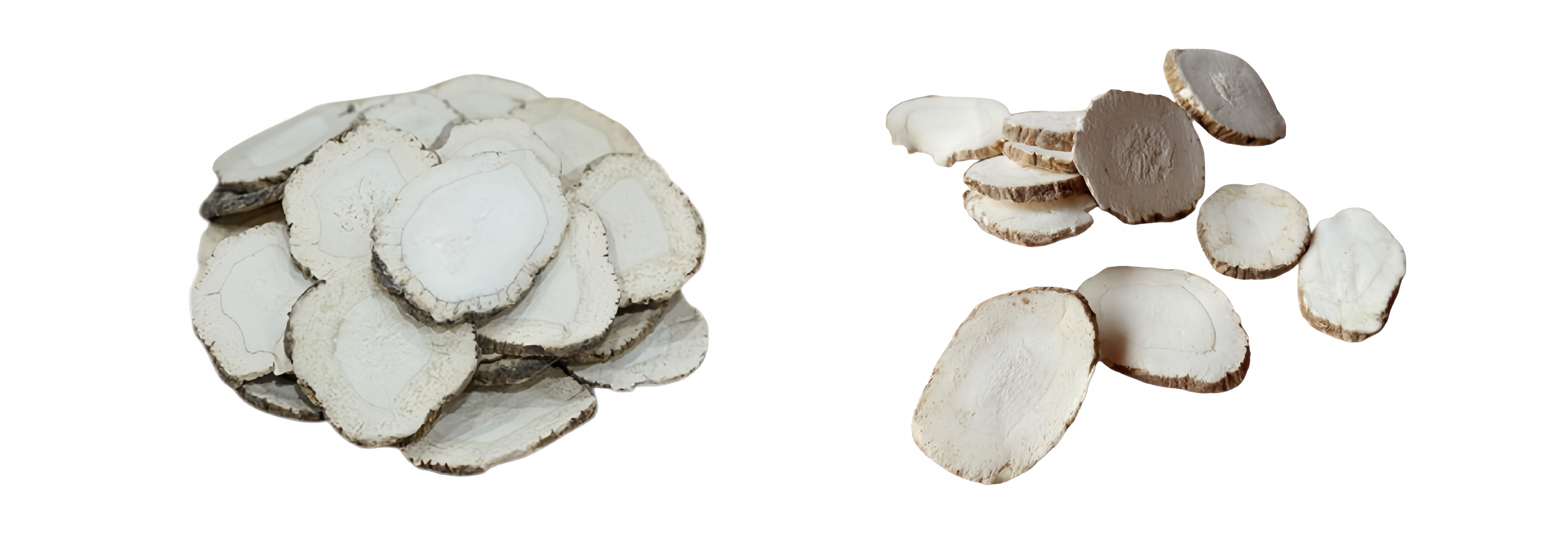
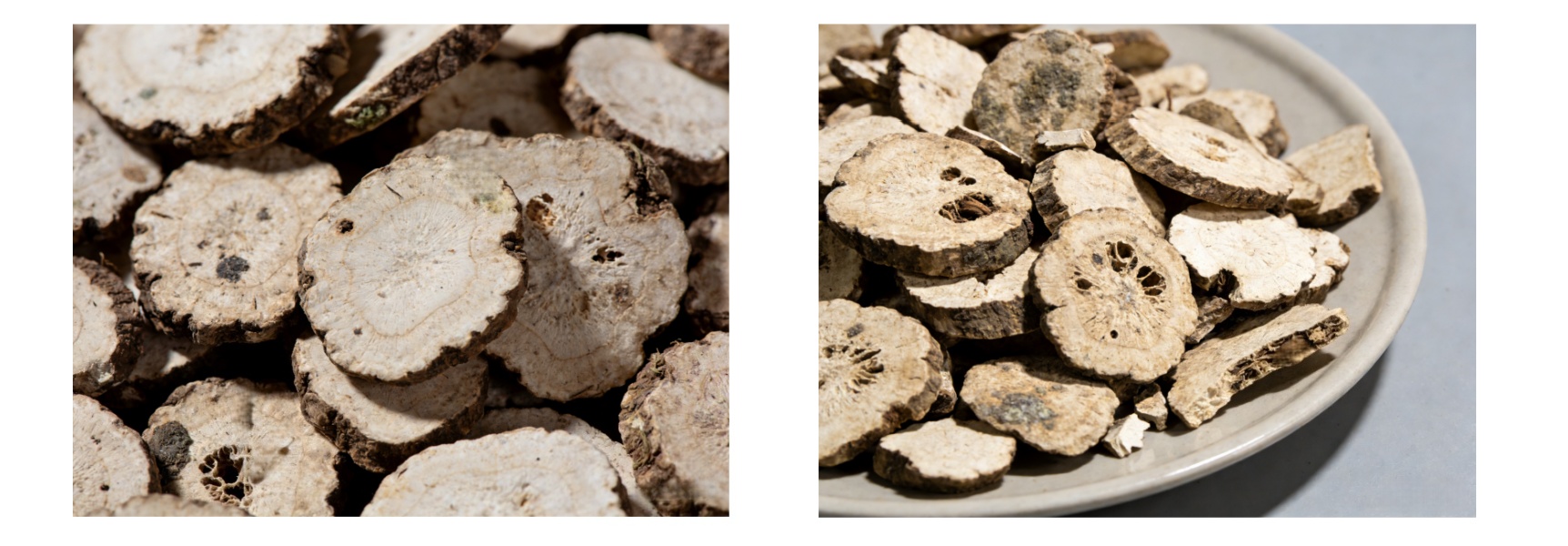
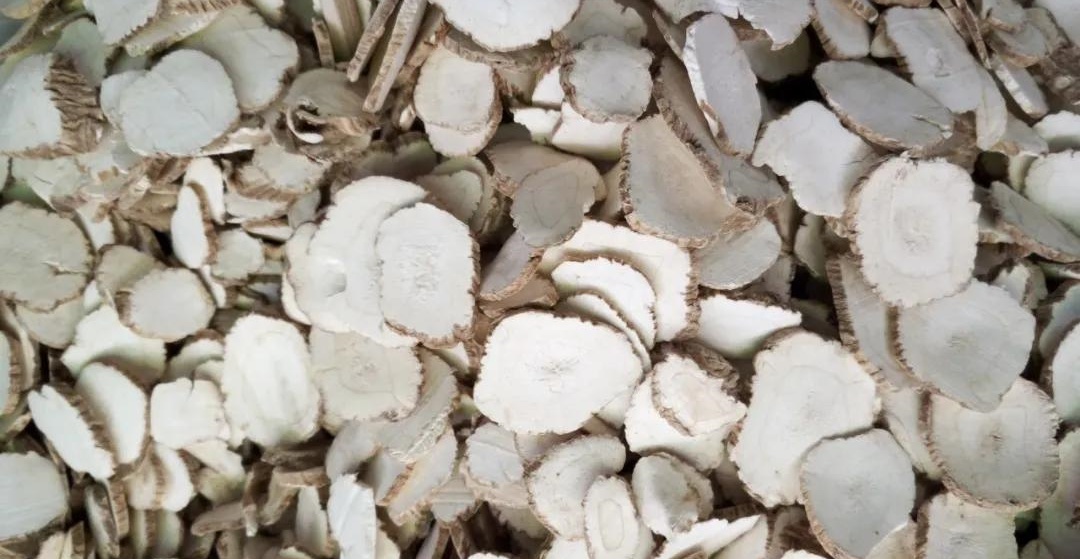
The root is conical in shape, with a thick upper part that tapers toward the lower end. Its surface is grayish-brown to yellowish-brown, exhibiting longitudinal wrinkles and lenticel-like protrusions. The cross-section is pure white or grayish-white, highly starchy (floury), with a distinct brown cambium ring and radial striations. It possesses a strong, characteristic, and lasting aroma, combining fragrant and pungent-dispersing notes. The texture is solid, heavy, and not easily broken. The taste is pungent and slightly bitter. When a small amount of its powder is placed in clear water, high-quality root will release a large amount of fine, white starch. Alternatively, when burned, its fragrance becomes even more intense.
Inferior Angelica Dahurica Root
The roots are thin, shriveled, often with multiple forks, or may have a hollow core (due to premature bolting). The cross-section appears yellowish or grayish, with weak starch-like texture or fibrous characteristics. Those treated with sulfur fumigation tend to have an unnaturally uniform, chalky, or plaster-like white appearance, lacking the natural layered texture. The aroma is faint, sometimes accompanied by a musty or earthy odor. The texture is light, porous, dry, and easily crumbled, with insufficient pungency or undesirable off-flavors. When soaked in water, it may turn cloudy or show sediment impurities. Upon burning, it emits little to no aromatic scent or may produce a charred, unpleasant odor.
IV. Main Chemical Components
▪ Coumarin Compounds
These are the most characteristic and active components of Angelica Dahurica Root, contributing to its photosensitive properties as well as its core pharmacological effects such as anti-inflammatory, antispasmodic, and analgesic actions. They also serve as the essential material basis for its use in treating headaches and skin conditions.
▪ Volatile Oils
These constitute its rich and distinctive aroma and possess synergistic effects, including antibacterial, antifungal, and transdermal absorption-promoting properties.
▪ Polysaccharides and Starch
These components give the root’s cross-section its characteristic “starchy” texture and provide moisturizing, film-forming, and soothing effects when applied topically to the skin.
V. Core Efficacy
Angelica Dahurica Root is warm in nature, pungent in taste, and enters the stomach, large intestine, and lung meridians. Its core functions are to release the exterior and dispel cold, expel wind and relieve pain, unblock the nasal passages, dry dampness and stop leukorrhea, reduce swelling, and expel pus. Its pungent, aromatic, and warming properties enable it to both act on the exterior to dispel wind, cold, and damp pathogens, and penetrate internally to resolve damp turbidity. It is particularly commonly used in dermatological and cosmetic formulations. When applied externally in bath sachets, its characteristic "unblocking" and "aromatic" effects can be utilized safely and fully.
▪ Deeply Dispels Wind and Cold, Relieves Head and Body Pain
For headaches and supraorbital bone pain caused by wind-cold common cold, as well as rheumatic pain, joint and muscle soreness, the pungent and warming dispersing power of Angelica Dahurica Root directly reaches the affected area. Its volatile aromatic molecules are rapidly released in hot water, and through transdermal absorption and slight steam inhalation, effectively unblock qi and blood in the meridians of the head and body surface, expelling external pathogens such as wind, cold, and dampness. This rapidly relieves various pains caused by external pathogens or rheumatism, often leaving a feeling of overall comfort and clear-headedness after bathing.
▪ Aromatic Damp-Resolving, Cleanses Skin and Brightens Complexion
Its aromatic and drying nature helps remove dampness and oiliness from the skin, providing auxiliary improvement for conditions such as eczema, skin itching, and acne. Traditionally, it has also been commonly used for perfuming the body and moisturizing the face. During bathing, the active components of Angelica Dahurica Root act directly on the skin of the entire body. Its damp-drying effect helps cleanse pores and balance sebum; its rich starch content and volatile components gently nourish the skin and promote local microcirculation. Long-term use may help improve rough and dull skin, leaving it feeling refreshed and smooth.
▪ Unblocks Nasal Passages and Improves Breathing
It is particularly effective for nasal congestion, runny nose, and reduced sense of smell caused by wind-cold or rhinitis. The warm steam during bathing carries the aromatic and orifice-unblocking molecules of Angelica Dahurica Root, which are directly inhaled through the respiratory tract, rapidly acting on the nasal mucosa. This helps constrict swollen blood vessels, promotes the discharge of secretions, and effectively relieves nasal congestion, facilitating clear breathing.
Click here to see our adaptogen bath soak with Angelica Dahurica Root.