I.Base Origin Information:
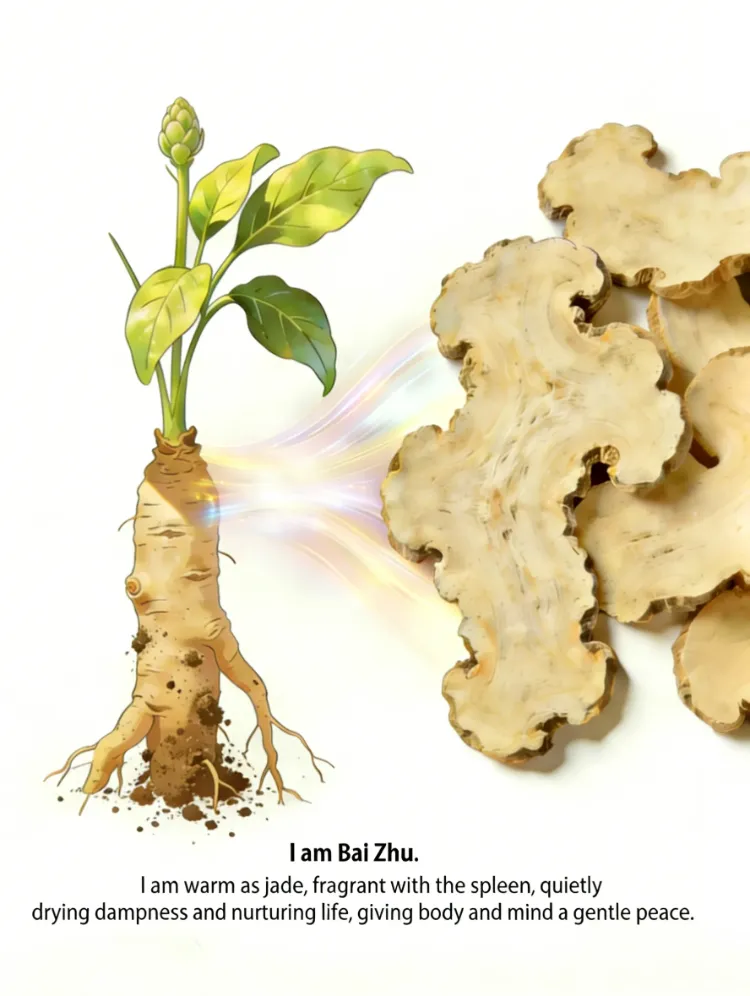
Largehead Atractylodes Rhizome, with the Latin name ATRACTYLODIS MACROCEPHALAE RHIZOMA, is the dried rhizome of Atractylodes macrocephala Koidz., a plant belonging to the Asteraceae family. This seemingly ordinary rhizome holds the esteemed position of being the "foremost essential herb for tonifying the spleen" in the canon of traditional Chinese medicine. Since its inclusion in the Shennong's Classic of Materia Medica, it has been classified as a top-grade herb, renowned for its effects of "invigorating the spleen and replenishing qi, drying dampness and promoting diuresis, stopping sweating, and calming the fetus." In its name, the character "Zhu" originally refers to herbs with special efficacy, while "Bai" (white) denotes the color of its cross-section and its processing method (traditionally, it is soaked in rice-washed water before slicing, resulting in a white color), distinguishing it from Atractylodes Lancea Rhizome.View more introductions to Chinese medicinal herbs.
II. Authentic Production Area:
The hilly and mountainous regions of Zhejiang, Anhui, Hunan, and Jiangxi provinces in China are the traditional genuine producing areas of Largehead Atractylodes Rhizome, with the quality from Pan'an and Shengzhou in Zhejiang ("Zhe Largehead Atractylodes Rhizome") and Pingjiang and Longhui in Hunan ("Pingjiang Largehead Atractylodes Rhizome") being considered the most superior. The unique natural environment of these regions, combined with scientific cultivation management, collectively contributes to its remarkable medicinal properties.All the Chinese herbal medicines in our herbal bath tea bag come from authentic production areas.

1.Precise Adaptation to Geography and Climate: Largehead Atractylodes Rhizome thrives in cool, humid climates and is sensitive to high temperatures and drought. The genuine producing areas are typically situated on gentle mountain slopes or hilly terrain at altitudes of 300-800 meters, with an average annual temperature of 15-18°C, annual precipitation of 1400-1800 mm, and frequent cloud cover and mist. This "cool, humid, and scattered light" environment is most conducive to the accumulation of active substances such as volatile oils and polysaccharides in the rhizome. Well-drained, slightly acidic yellow soil or red soil, rich in humus, is key to the formation of high-quality characteristics such as "cinnabar spots" (oil cavities) and "cloud-like brocade patterns."

2.Mountain Crop Rotation and Ecological Cultivation: Production areas generally adopt a "crop rotation system of three years or more" (often rotated with rice or leguminous crops) to effectively reduce the occurrence of soil-borne diseases (such as southern blight and root rot). Key agronomic practices include: selecting robust seed rhizomes with obvious "chrysanthemum heart" patterns; cultivating in "deep furrows and high ridges" to facilitate drainage; precise topdressing during the growth period, applying nitrogen fertilizer in the early stage to promote seedling growth, and supplementing with phosphorus, potassium fertilizers, and organic fertilizers in the later stage to promote rhizome enlargement; and timely removal of flower buds ("bolting") to concentrate nutrient supply to the roots.
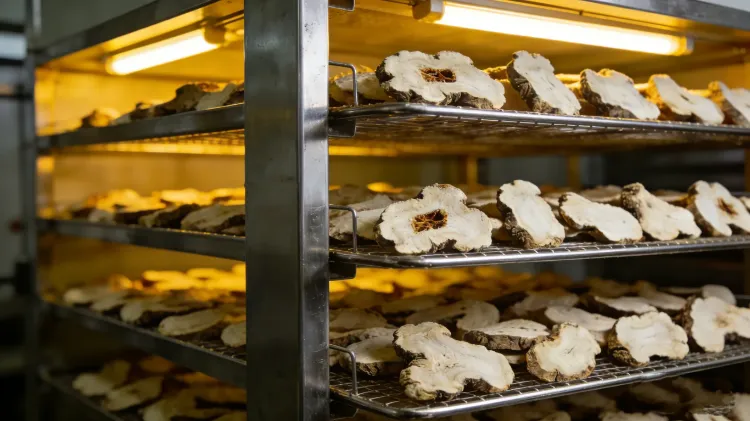
3.The Art of "Property Preservation" in Harvesting and Processing: Harvesting takes place after 2-3 years of cultivation, in winter when the stems and leaves turn withered and yellow. At this time, the rhizomes are plump, and the content of active components reaches its peak. After harvesting, fibrous roots are removed, and the rhizomes are immediately subjected to "firewood smoking" or "low-temperature slow baking." In the traditional "baking method," they are smoked with firewood such as pine or cypress until semi-dry, then repeatedly piled up for "sweating" until completely dry. Largehead Atractylodes Rhizome processed in this way has a strong aroma and an oily cross-section. Modern methods employ 40-50°C gradient drying technology, which can more stably retain active components and prevent scorching.
III. Quality
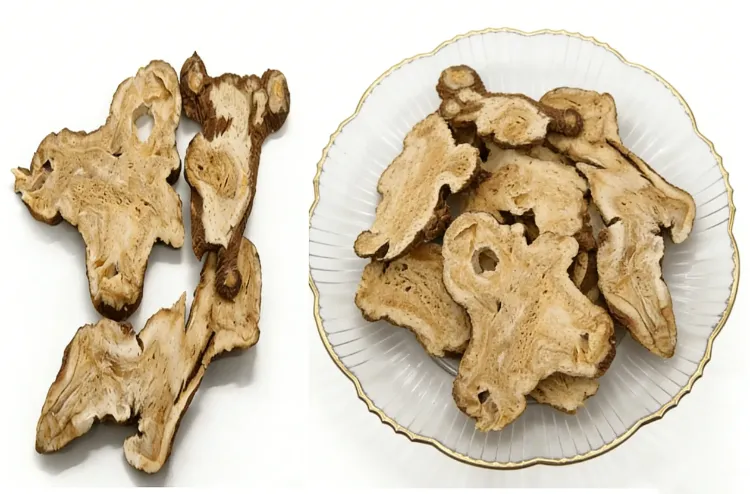
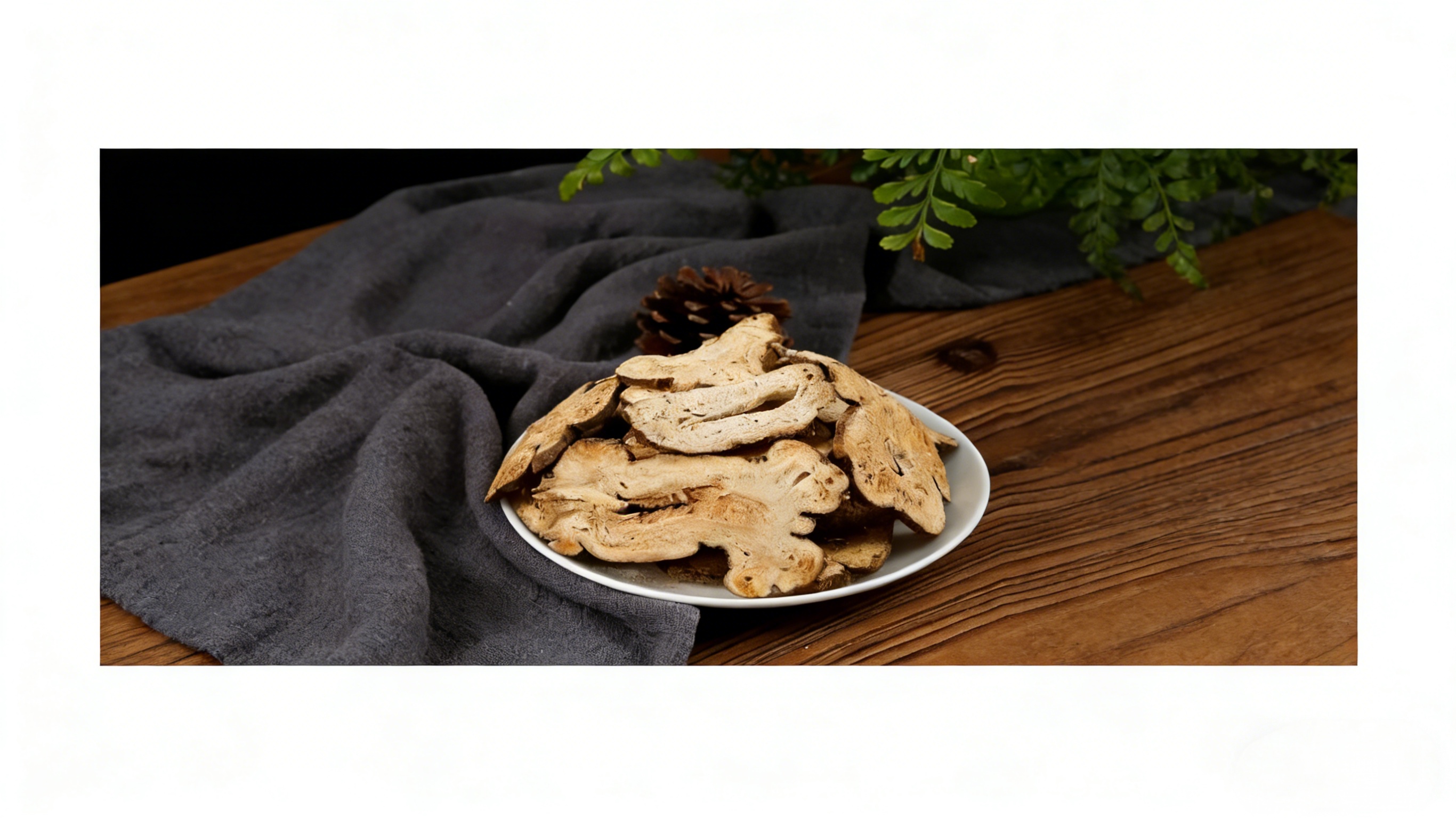
High-quality Largehead Atractylodes Rhizome: The rhizome is in the form of thick, fist-like lumps or irregular masses. The surface is grayish-yellow to grayish-brown, featuring nodular protrusions ("cloud-like heads") and longitudinal wrinkles. The cross-section is yellowish-white to pale yellowish-brown, with scattered brownish-yellow "cinnabar spots" (oil cavities) and distinct "chrysanthemum heart" striations. The texture is firm, heavy, and not easily broken. The aroma is fresh, rich, and long-lasting, possessing a characteristic and elegant "atractylodes fragrance." When tasted, it is sweet and slightly pungent, with a slight stickiness when chewed. When slices are soaked in hot water, the liquid becomes clear and bright pale yellow, and the aroma is released. When baked with fire, the aroma becomes even more intense and pure.After bathing with a herbal bath soak containing high-quality Largehead Atractylodes Rhizome, your body will also carry an elegant, subtle fragrance.
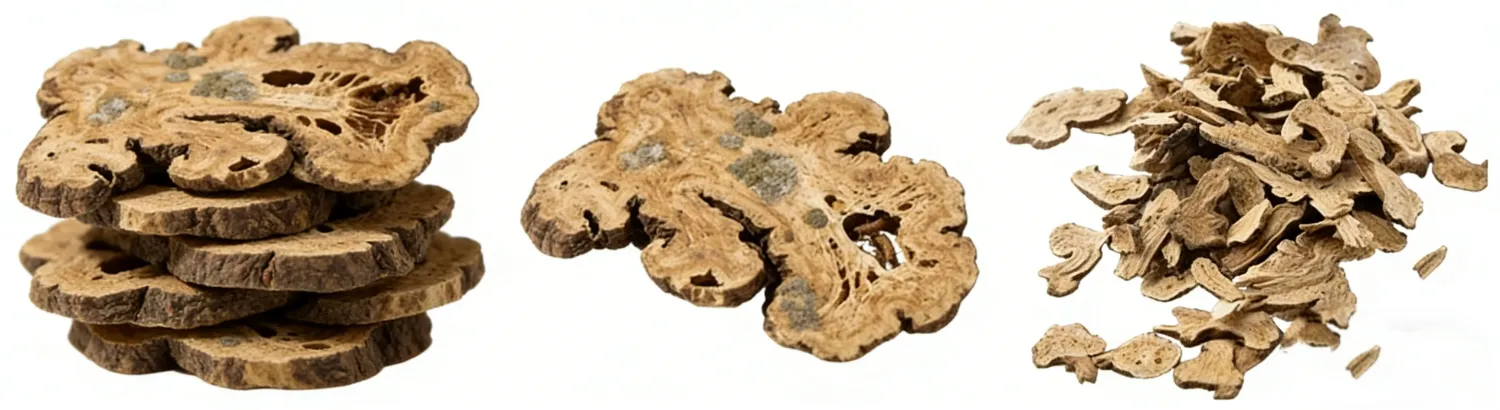
Ordinary/Low-quality Largehead Atractylodes Rhizome: The rhizomes are small and thin, straight-strip-shaped, with a smooth surface. The cross-section is pale white or deep brown, with few or no cinnabar spots, and the center is prone to hollowing or lignification. The texture is light and porous or as hard as wood, easily broken. The aroma is weak or faint, possibly with musty or smoky odors (indicating over-smoking). The taste is bland or bitter-astringent. When soaked in hot water, the liquid becomes turbid or shows sediment impurities. When baked, the emitted odor is irritating or lacks fragrance.Inferior raw materials will never find their way into our herbal bath soak bags. Learn more about us.
IV. Main Chemical Components
1.Volatile Oil Complex: This is the main source of the characteristic aroma of Largehead Atractylodes Rhizome and serves as the key material basis for its effects of invigorating the spleen, aiding digestion, and its antibacterial and anti-inflammatory actions.
2.Polysaccharides (e.g., Atractylodes Polysaccharides): These are important components responsible for its efficacy in tonifying spleen qi and enhancing immunity, with functions such as regulating intestinal function and protecting the gastric mucosa.
3.Lactones: These compounds contribute to its bitter taste and are associated with its pharmacological activities, including diuretic, sedative, and anti-tumor effects.Click here to see our adaptogen bath soak with Largehead Atractylodes Rhizome.
V.Core Efficacy
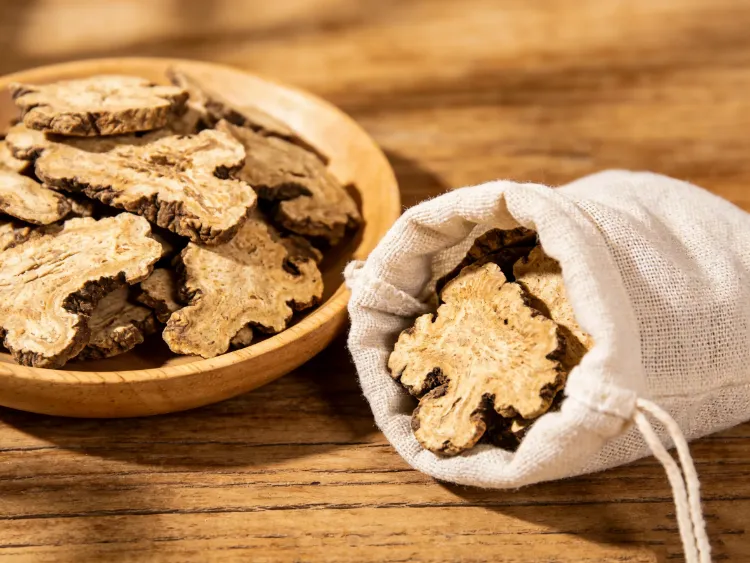
Largehead Atractylodes Rhizome is warm in nature, bitter and sweet in taste, and acts on the spleen and stomach meridians. Its core efficacies are "invigorating the spleen and replenishing qi, drying dampness and promoting diuresis, stopping sweating, and calming the fetus." It is revered as the "holy herb for tonifying the earth" and is adept at treating all patterns of spleen deficiency. When used externally in the form of a "bath bag," its medicinal power can gently permeate through the meridians and cutaneous regions, exerting unique regulating effects.
Strengthening the Spleen and Replenishing Qi, Alleviating Deficiency-Type Edema and Fatigue:
For symptoms such as poor appetite, abdominal distension, loose stools, limb edema, and fatigue and weakness caused by spleen qi deficiency, Largehead Atractylodes Rhizome can strengthen the spleen and stomach and transport and transform dampness. Based on the theories of "the spleen governs the muscles" and "the spleen governs the four limbs," the volatile oils and polysaccharides and other active components in Largehead Atractylodes Rhizome, promoted by transdermal absorption through warm water, can gently stimulate the circulation of qi and blood on the body surface and indirectly invigorate spleen yang. Its "dampness-drying" power helps promote the metabolism of excess fluid in interstitial tissues, alleviating the sensation of heavy limbs and puffiness caused by spleen deficiency with dampness encumbrance.
Consolidating the Exterior and Stopping Sweat, Enhancing Defensive Function:
It is used for spontaneous sweating due to qi deficiency, where sweating is profuse upon slight exertion and the individual is prone to wind-cold invasion. Bathing itself can open and release the striae and interstitial spaces. However, with the reasonable use of Largehead Atractylodes Rhizome, its "exterior-securing" components can help regulate the opening and closing of pores, making one less susceptible to external pathogens after bathing due to loosened striae. Long-term, moderate use can help improve the constitution of exterior deficiency with insecurity, reducing abnormal sweating.
Drying Dampness and Removing Turbidity, Cleansing the Skin:
Its bitter-warm and dampness-drying properties have a certain cleansing effect on skin dampness and oiliness. When used in medicinal baths, the active components of Largehead Atractylodes Rhizome can help gently remove excess oil and dampness from the skin's surface, improving the sticky and uncomfortable sensation of the skin caused by damp-heat climates, leaving the skin feeling refreshed and firm after bathing.