
I.Base Origin Information:
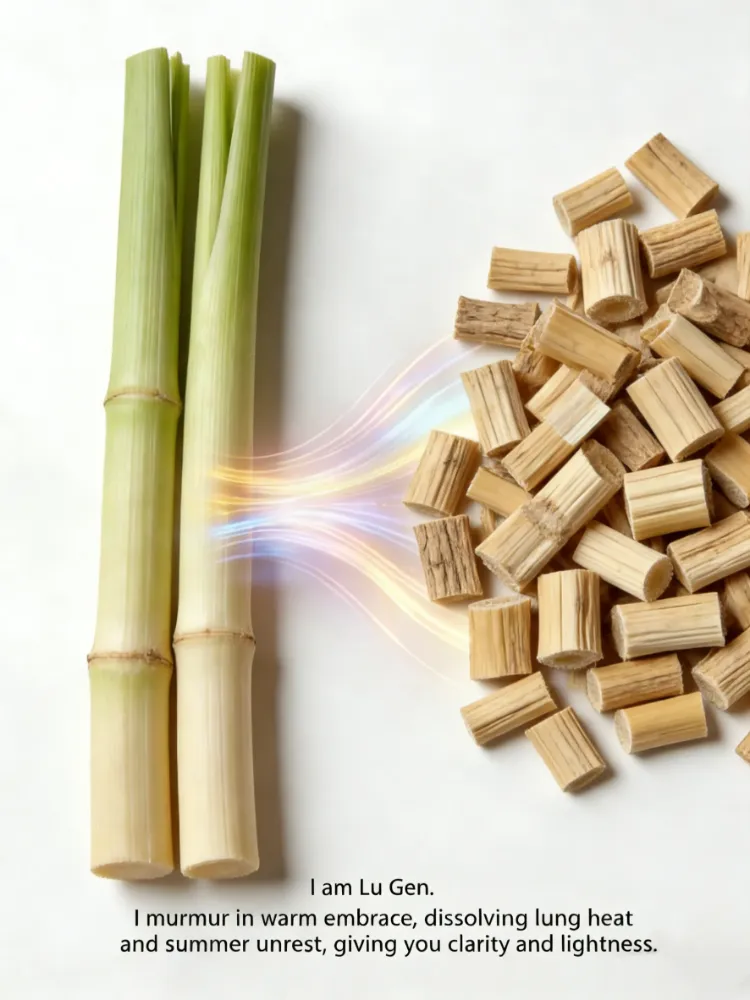
Reed Rhizome, with the pharmaceutical Latin name PHRAGMITIS RHIZOMA, is the fresh or dried rhizome of Phragmites communis Trin., a plant belonging to the Poaceae family. This aquatic plant rhizome, which grows in shallow water along rivers, lakes, marshes, and ponds, holds the reputation of being the "ginseng of the water" in the system of traditional Chinese medicine. It has been documented since the Collectanea of Commentaries on the Classic of Materia Medica (Bencao Jing Jizhu). Its name, "Lu" (芦) refers to the reed, and "Gen" (根) indicates the medicinal part, the root. Reed Rhizome is cold in nature, sweet in taste, and acts on the lung and stomach meridians. It possesses the effects of clearing heat and generating fluids, relieving irritability and stopping vomiting, and promoting diuresis. It is particularly adept at clearing and penetrating heat from the lungs and stomach, generating fluids to relieve vexation and thirst, and it "generates fluids without retaining pathogenic factors," making it an essential herb for warm febrile diseases and heat patterns affecting the lungs and stomach.
II.Authentic Production Area:
The middle and lower reaches of the Yangtze River in China, including Anhui, Jiangsu, Zhejiang, Hubei and other provinces with dense water networks, are the traditional authentic production areas of Reed Rhizome. Among them, those produced in Anqing of Anhui, Gaoyou of Jiangsu, and Hangzhou of Zhejiang are of the finest quality. The abundant water resources and scientific harvesting management in these regions jointly contribute to its outstanding medicinal properties.
Scientific Adaptation of Geography and Climate:Reed is a perennial tall herb that grows in water or wet soil, preferring a warm and humid climate. It mostly grows in shallow water along rivers and ponds. The authentic production areas are located in the middle and lower Yangtze River plains and water‑network zones, with an annual average temperature of 15–17 °C and annual precipitation of 1000–1400 mm. These areas feature dense rivers and lakes and sufficient water sources. Such an ecological environment of “alternating land and water, with silt accumulation” is particularly suitable for the horizontal creeping growth and nutrient accumulation of reed underground rhizomes. Loose, fertile alluvial soil or sandy loam rich in organic matter is the key to forming its quality of “tough and hollow texture, white color and sweet taste”.

Wild Cultivation and Sustainable Harvesting
1.Rotational Harvesting and Resting Resource Management:The production areas implement a system of zonal rotational harvesting and combination of harvesting and cultivation for wild reed resources. Generally, reed marshes are divided into several blocks, which are harvested in rotation annually, allowing a 3–5 year recovery and growth period for the rhizomes to ensure sustainable resource utilization.
2.Scientific Selection of Harvesting Time:Reed Rhizome can be harvested all year round, but late spring to early summer or autumn is preferable. Those harvested in spring (spring Reed Rhizome) are rich in juice, tender and sweet; those harvested in autumn (autumn Reed Rhizome) are solid and more potent. During harvesting, the main rhizomes are retained, and only partial lateral roots are collected to facilitate regeneration.
3.Primary Processing: Removal of Non‑Medicinal Parts:After harvesting, buds, fibrous roots and membranous leaves must be removed, and soil washed clean. This procedure directly affects the cleanliness of the finished product. High‑quality Reed Rhizome must be “free of buds, free of fibrous roots, and free of soil”.

Processing Technology: Fresh Use and Drying
1.Processing of Fresh Reed Rhizome:After harvesting and cleaning, it is stored in wet sand to maintain freshness and moisture. Fresh products have stronger medicinal effects, and the dosage is usually doubled.
2.Processing of Dried Reed Rhizome:It is dried in the sun or at low temperature (≤50 °C). Modern technology adopts hot‑air circulation drying, which achieves uniform dehydration in a closed environment, resulting in rhizomes with uniform dryness, yellowish‑white color, and a high retention rate of active ingredients.The "Sheng Sheng" brand herbal bath soak containing reed roots is not only made from locally sourced materials, but also enhanced with modern processing techniques.
III. Quality
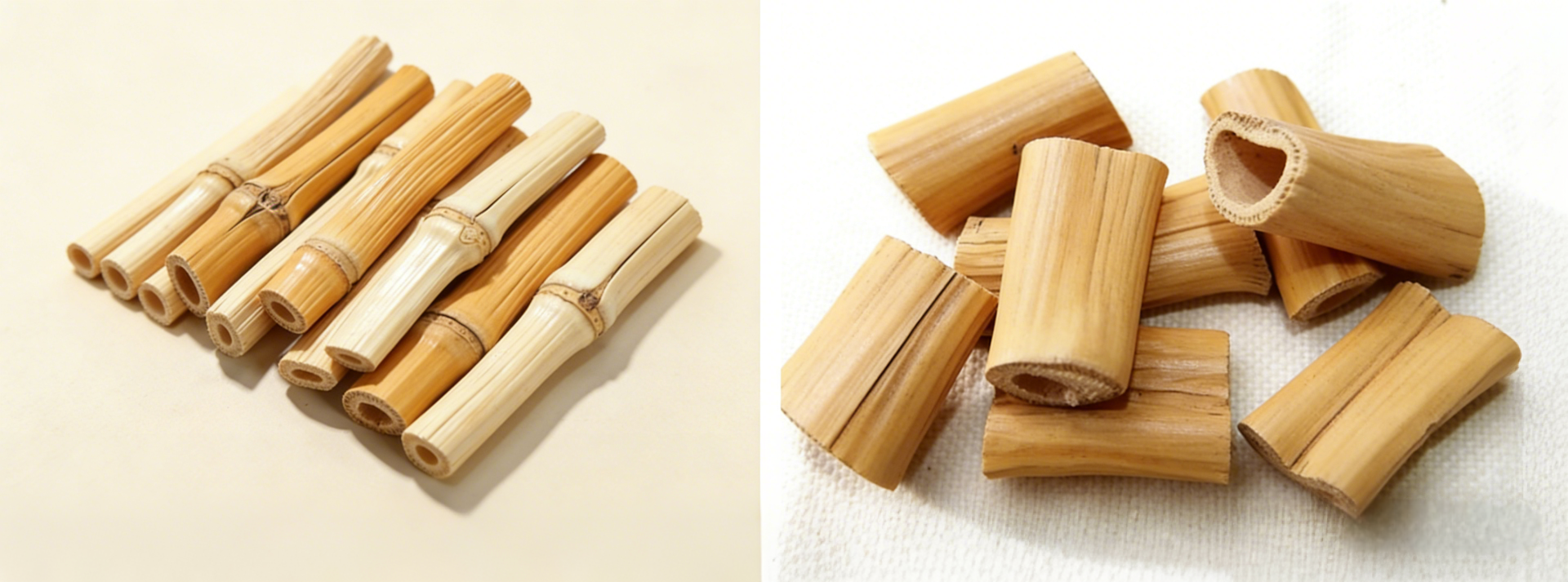
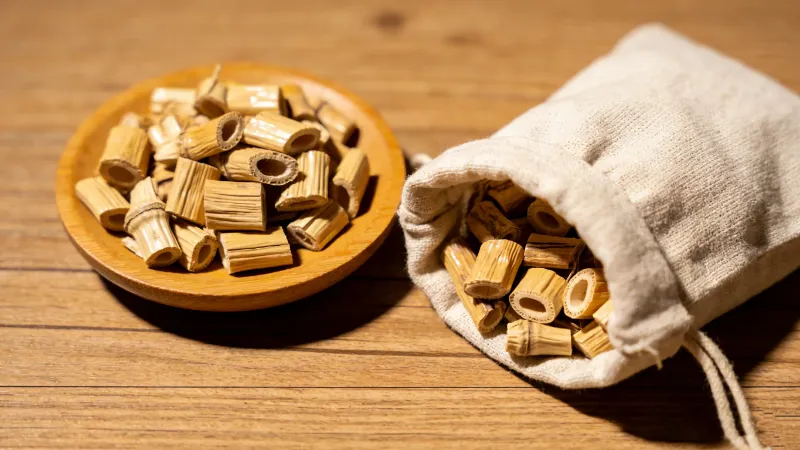
High-quality Reed Rhizome:Fresh Reed Rhizome is long cylindrical, somewhat flattened, varying in length, with a diameter of 1–2 cm. The surface is yellowish-white and lustrous; the outer peel is loose and peelable. Nodes are ring-shaped, with internodes 3–12 cm long.Dried Reed Rhizome is flattened cylindrical, relatively hard at nodes, with longitudinal wrinkles on internodes. It is light in weight, tough in texture, and not easily broken.The cut surface is yellowish-white and hollow, with a wall thickness of 1–2 mm, featuring small pores arranged in a ring (this is the characteristic structure of Reed Rhizome, commonly known as “compass-like pattern”).It is odorless and sweet in taste. It has a mild sweet flavor when chewed, with no abnormal odors. After soaking in hot water, the liquid is slightly turbid; the segments absorb water and swell but retain their shape. After decoction, the decoction is clear, with a mild sweet taste.Discover our Reed Rhizome herbal bath soak.
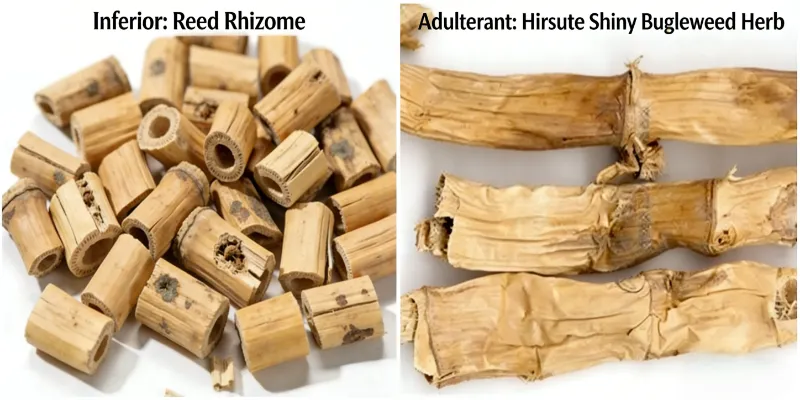
Ordinary / Inferior Reed Rhizome:The rhizome is slender and thin, with irregular lengths. The surface is dull and gray (greyish-brown or yellowish-brown), with excessively short or long internodes and poor luster.Residual fibrous roots, buds or soil are commonly present. The texture is dry and brittle, or damp and moldy.The cut surface is dark in color, hollow with uneven wall thickness, and the small pores are irregularly arranged.The odor is weak, or has moldy smell, sour smell (sulfur fumigated). The taste is bland, bitter or astringent.After soaking, the liquid is turbid and the Reed Rhizome segments tend to disintegrate. After decoction, the decoction shows abnormal color or offensive odor.
IV.Main Chemical Components
1.Phenolic Acids and Phenylpropanoids:These include p-coumaric acid, ferulic acid, p-hydroxycinnamic acid, etc. They are the important material basis for the heat-clearing, anti-inflammatory and antioxidant effects of Reed Rhizome. Studies have shown that the contents of p-coumaric acid and ferulic acid can be used as quality evaluation indicators in Reed Rhizome decoction pieces of different commercial grades.
2.Flavonoids:These include tricin, tricin-7-O-rutinoside, liquiritin, isoliquiritin, and various other flavonoids and flavonoid glycosides. These components exhibit antioxidant, anti-inflammatory and hepatoprotective activities, and are closely related to the heat-clearing efficacy of Reed Rhizome.
3.Lignans:These include various lyoniresinol glycosides, syringaresinol glycosides, etc. Studies have confirmed that some of these lignan components possess strong antioxidant activity.
4.Polysaccharides:Reed Rhizome is rich in polysaccharides, which exert antioxidant, hepatoprotective and immunoregulatory effects. They are one of the material bases for the “promoting fluid production and moistening dryness” efficacy of Reed Rhizome.
V. Core Efficacy
Reed Rhizome is cold in nature and sweet in taste, acting on the lung and stomach meridians.Its core functions are: clearing heat, promoting fluid production, relieving restlessness, stopping vomiting, and inducing diuresis.It is cold but not drastic, sweet but not greasy. It excels at clearing lung and stomach heat and generating body fluids, and also promotes diuresis to direct heat downward.When used externally in medicinal bath packs, its clear and diffusing nature, assisted by the warmth of water, is absorbed through the skin, exerting a unique effect of “guiding heat outward and clearing and resolving pathogens”:
Clearing heat and promoting diuresis, improving stranguria with painful urination:
It has a good effect on scanty dark urine, hot stranguria with painful urination, and difficult urination caused by pathogenic heat moving downward to the bladder.Reed Rhizome clears heat and promotes diuresis. Its active ingredients are fully released in hot water and absorbed transdermally, assisting in clearing damp‑heat in the lower jiao and promoting smooth urination.For mild urinary tract infections or discomforts of hot stranguria, a full‑body medicinal bath or sitz bath provides auxiliary regulation.The common clinical dosage is 40 grams decocted for bathing.
Clearing and diffusing lung heat, assisting in lung‑heat cough:
It helps relieve cough with thick phlegm and lung abscess with purulent bloody sputum caused by excessive lung heat.Reed Rhizome effectively clears lung heat and promotes diuresis to expel heat‑toxin through urine.In medicinal baths, its active ingredients are absorbed through the skin; combined with the dispersing effect of hot water, they help clear stagnant heat in the muscle‑surface and lung meridian, relieving lung‑heat cough and sore throat.Ancient experience also records: “fresh Reed Rhizome pounded and squeezed into juice, mixed with honey for oral administration” to treat sore throat.
Promoting rash eruption and eliminating pathogens, assisting in infantile measles:
It helps promote eruption in the early stage of measles with incomplete rash outbreak in children.
Traditional experience holds that, combined with oral medication, Reed Rhizome and coriander decocted into a strong solution for body‑rubbing assists measles eruption.This method uses the warming and opening effect of the medicinal bath, together with the diffusing nature of Reed Rhizome, to help expel rash‑toxin outward — a classic external therapy in traditional Chinese pediatrics.Relieving summerheat and restlessness, refreshing the body and mindIt effectively cools and relieves summerheat‑induced restlessness, thirst, fever, and dry mouth.
In summer medicinal baths, the sweet, cold, and moistening nature of Reed Rhizome helps dispel stagnant heat and promote fluid production to quench thirst.Its refreshing aroma, together with the relaxing effect of warm bathing, effectively relieves irritability and fatigue caused by summerheat, bringing a cool and comfortable sensation.
FAQ:
Who would be suitable to use adaptogen herbal bath tea bag soak?
I. People whose characteristics conform to 9 types of constitutions under traditional Chinese medicine theory
II. Parents and partners seeking time for close and interactive family moments
III. Sub-health individuals such as:
▪ Modern office workers who sit or stand for long periods, have tense muscles and nervous tension
▪ People with sleep disorders, such as difficulty falling asleep, frequent nightmares and easy awakening, or feeling tired after waking up
▪ Those prone to fatigue: even with adequate rest, still feel heavy and lacking in energy
▪Prone to mood swings:anxious,irritable,depressed,and lacking enthusiasm for daily affairs
▪ Digestive problems: loss of appetite, abdominal distension, constipation or diarrhea
▪ Weakened immunity: frequent colds, dry skin, slow wound healing.
For more precautions on herbal bath soak usage, check the FAQ page.